
Welcome to My Blog! I’m thrilled to have you here!
Before we dive into the content, I’d love for you to join me on my social media platforms. It’s where I share extra insights, connect with our amazing community, and keep you updated on the latest news.
Here’s how you can stay connected:
📘 Facebook: Suzhou Xize Textile Technology Co., ltd.
Now, let’s embark on this journey together! I hope you find the content here not only insightful but also inspiring and valuable. Let’s get started!
Table of Contents
Key Takeaways
- Traceability will move from a sustainability bonus to a practical sourcing requirement.
- Buyers will prioritize durability, verified composition, colorfastness, and repeatable bulk quality.
- Recycled and lower-impact materials will grow, but reliable documentation will matter more than broad environmental claims.
- Textured jacquard, dense constructions, subtle surface effects, and versatile neutral colors will influence product development.
- Digital sampling, flexible minimum order quantities, and shorter production runs will help brands reduce inventory risk.
- The best fabric choice will depend on end use, testing requirements, target price, care instructions, and market regulations.
Woven textile fabric is entering 2027 as a highly adaptable material category rather than a traditional construction limited to basic shirts, uniforms, curtains, or upholstery. Brands now expect structure, visual depth, reliable performance, measurable safety, and faster customization from the same fabric program.
For manufacturers, importers, designers, wholesalers, and private-label buyers, the main question is no longer simply, “What fabric looks good?” The more useful question is, “Which fabric can deliver the required appearance, performance, documentation, and supply stability at commercial scale?”
This guide explains the woven textile fabric trends likely to shape sourcing decisions in 2027. It also compares materials, structures, testing priorities, and application choices so buyers can build more commercially resilient product collections.
What Is Woven Textile Fabric?
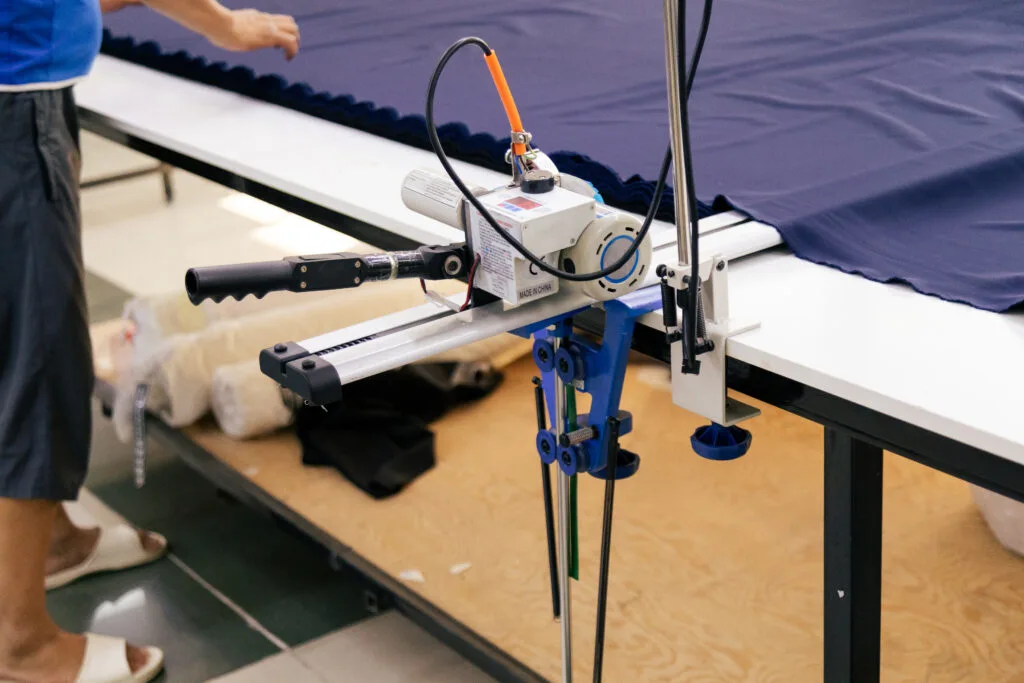
Woven textile fabric is produced by interlacing warp yarns and weft yarns, usually at right angles. Its performance can be changed through yarn selection, density, weave pattern, finishing, dyeing, printing, and surface treatment.
Common foundational constructions include plain weave, twill, and satin, while jacquard technology enables more complex patterns to be built directly into the material. Readers who need a general technical introduction can review the definitions of woven fabric and weaving.
Warp and Weft Structure
Warp yarns run lengthwise and are held under tension during production. Weft yarns travel across the width of the fabric.
Their interaction affects stability, drape, strength, texture, breathability, and appearance. Altering yarn thickness, density, and interlacing patterns allows manufacturers to create very different products from the same basic woven principle.
Structural Stability
Compared with many knitted constructions, woven textile fabric generally offers greater dimensional stability and lower natural stretch. This makes it useful for garments, bags, curtains, cushions, uniforms, workwear, and products that need to retain a controlled shape.
Elastic yarns or specialized constructions can still be added when the finished product requires greater flexibility.
Design Versatility
The category includes lightweight cotton cloth, high-density polyester, stretch blends, decorative jacquard, brushed surfaces, coated performance materials, and printed fabric.
This broad range allows product developers to adjust both technical performance and visual identity without changing the basic woven structure.
Why Woven Textile Fabric Will Remain Important in 2027
The strength of woven textile fabric lies in controllability. Buyers can define yarn count, fiber composition, thread density, weight, usable width, color, pattern, finishing, and performance targets with a high level of precision.
That controllability supports a wide range of products, from fashion and home textiles to bags, uniforms, accessories, and commercial applications. It also makes woven textile fabric suitable for brands that need consistent repeat orders across different seasons or markets.
In 2027, however, visual appearance alone will not be enough. Successful fabric programs will also need to support traceability, regulatory preparation, efficient sampling, measurable quality, and reliable bulk reproduction.
1. Traceable Woven Textile Fabric Will Gain Buyer Attention
Traceability is becoming a commercial sourcing requirement because buyers need clearer information about fiber composition, processing, chemical safety, and supplier responsibility.
The European Commission has identified textile apparel as a priority product group under the Ecodesign for Sustainable Products Regulation working plan. Its Digital Product Passport system is intended to organize product information and support greater transparency across supply chains. The Digital Product Passport Registry officially went live in July 2026, making data preparation increasingly relevant to suppliers serving the European market.
Buyers can follow regulatory developments through the European Commission’s official Digital Product Passport resource.
Verified Woven Textile Fabric Composition
A supplier should be able to explain whether a woven textile fabric uses virgin polyester, recycled polyester, cotton, viscose, nylon, elastane, or a blend.
Buyers will increasingly request composition reports that match product labels, customs documents, specifications, invoices, and marketing claims. Inaccurate or inconsistent composition data can create compliance, labeling, and customer-trust risks.
Batch-Level Woven Textile Fabric Documentation
A general company certificate may not answer every sourcing question. More buyers will request test reports, production dates, lot references, color standards, and other batch-level records that connect the approved sample to bulk production.
This information becomes especially important for recycled materials, performance finishes, baby products, direct-to-skin textiles, and products sold in regulated markets.
What Buyers Should Ask
Ask whether the supplier can maintain a clear record from yarn purchasing through weaving, dyeing, finishing, inspection, and shipment.
This does not require every order to use the same digital platform. However, the relevant information should be organized, retrievable, and consistent across purchase orders, test reports, labels, and shipping documents.
2. Durability Will Become a Stronger Design Trend
Sustainability discussions are shifting from material labels alone toward useful product life. A woven textile fabric that resists abrasion, maintains color, holds its shape, and survives repeated cleaning may remain usable longer than an attractive but poorly performing alternative.
Durability is not determined by fabric weight alone. Fiber properties, yarn structure, weave density, finishing, sewing quality, and care conditions all influence how the finished product performs.
Woven Textile Fabric Abrasion Resistance
Abrasion performance matters for upholstery, bags, uniforms, workwear, cushions, seating products, and high-contact apparel.
A heavier woven textile fabric may not automatically outperform a lighter one. Buyers must consider fiber strength, yarn twist, surface structure, weave construction, finishing materials, and the actual test method used.
ASTM textile abrasion methods recognize that fabric construction, fibers, yarns, and finishing can all influence abrasion performance.
Woven Textile Fabric Colorfastness
Buyers should define whether the product needs resistance to washing, rubbing, water, daylight, perspiration, or hot pressing.
International test methods such as the ISO 105 series can help buyers and suppliers agree on how color performance will be evaluated. For example, ISO 105-X12 covers resistance to rubbing, while ISO 105-C06 covers colorfastness during domestic and commercial laundering.
A buyer should not simply request “good colorfastness.” The required test, minimum grade, color type, end use, and care condition should all be written into the specification.
Woven Textile Fabric Dimensional Stability
Shrinkage and deformation can create garment sizing problems, sewing defects, uneven curtains, distorted cushion covers, and customer complaints.
In 2027, more woven textile fabric specifications are likely to include acceptable shrinkage ranges and care conditions before bulk orders are approved.
The fabric should ideally be tested using conditions that reflect the actual washing, drying, ironing, or commercial-cleaning method used by the customer.
3. Recycled Fibers Will Grow, but Proof Will Matter More
Recycled polyester and other lower-impact material options will remain important, particularly in apparel, accessories, home textiles, and commercial products.
However, the textile sector is still far from a fully circular material system. Textile Exchange reported that recycled fibers represented approximately 7.6% of global fiber production in 2024. Less than 1% of the global fiber market was made from pre-consumer or post-consumer recycled textile waste.
More information is available in the nonprofit organization’s Materials Market Report 2025.
Recycled Polyester Woven Textile Fabric
Recycled polyester can support durability, quick drying, wrinkle resistance, color consistency, and stable manufacturing.
For a recycled woven textile fabric program, buyers should clarify:
- The percentage of recycled content
- Whether the content is post-consumer or pre-consumer
- Whether the raw material comes from plastic bottles or textile waste
- Which certification covers the material
- Whether the certification applies to the yarn, fabric, supplier, or complete order
- Whether color and performance limitations apply
- Whether repeat production is available
A recycled claim should be supported by appropriate documentation instead of relying only on verbal descriptions.
Recycled Cotton Woven Textile Fabric
Recycled cotton can help use existing textile waste while creating a familiar natural appearance.
However, recycled cotton fibers may be shorter than virgin cotton fibers. Depending on the blend and manufacturing process, this can influence yarn strength, surface uniformity, pilling, tensile performance, and weaving efficiency.
Blending recycled cotton with virgin cotton, polyester, or another fiber may improve stability. The preferred ratio should be selected according to the final product rather than a sustainability claim alone.
Woven Textile Fabric Claims vs Measured Performance
A responsible material claim does not automatically guarantee suitable performance.
Buyers should evaluate recycled woven textile fabric using the same practical criteria applied to conventional materials, including:
- Tensile strength
- Tearing strength
- Abrasion resistance
- Colorfastness
- Shrinkage
- Pilling
- Hand feel
- Sewing behavior
- Bulk consistency
A balanced sourcing strategy considers both environmental objectives and the useful service life of the finished product.
4. Textured and Jacquard Woven Textile Fabric Will Expand
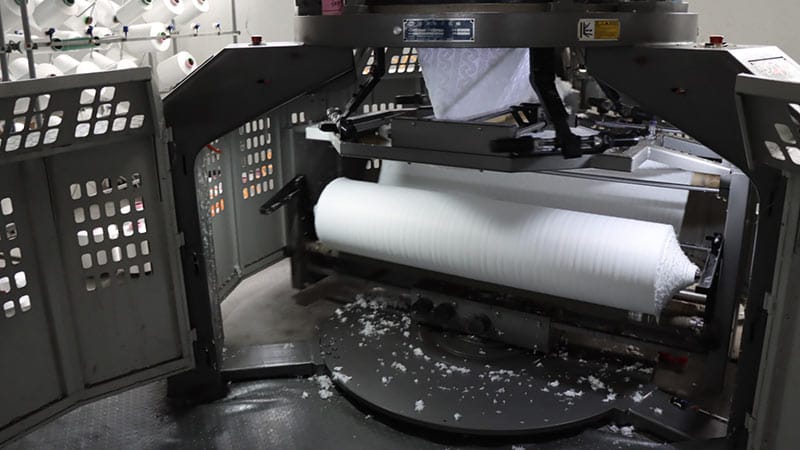
Flat surfaces will remain commercially important, but 2027 collections are likely to use more visible texture to communicate quality and differentiation.
Jacquard structures, small geometric patterns, tonal relief, softened checks, irregular stripes, and nature-inspired motifs can add depth without depending entirely on printed graphics.
Pattern Built Into Woven Textile Fabric
Jacquard fabric creates patterns through yarn interlacing rather than applying the complete design only to the surface.
This construction can produce visual depth, texture, and a premium tactile effect. The Jacquard mechanism was developed to simplify the weaving of complex patterns such as brocade and damask.
Quiet Woven Textile Fabric Texture
Not every buyer needs a large decorative motif.
Subtle woven textile fabric texture can help cushions, curtains, jackets, coats, bags, upholstery, and bedding feel more distinctive while remaining easy to coordinate with other products.
Small-scale patterns may also remain commercially useful for longer than highly seasonal graphics.
Commercial Color Direction
Warm neutrals, mineral-inspired shades, muted greens, softened blues, earthy browns, and controlled accent colors are practical directions for 2027 because they can work across fashion and interior collections.
However, buyers should not select color only from a general trend forecast. Final decisions should be validated against the target country, customer age, application, season, existing sales data, and brand positioning.
For a deeper review of patterns, materials, colors, and purchasing considerations, see XIZE’s guide to jacquard fabric trends for 2026–2027.
5. High-Density Construction Will Support Performance Products
High-density woven textile fabric uses closely arranged yarns to create a compact structure.
Depending on the fiber, yarn, and finishing method, this construction can provide strength, wind resistance, shape retention, a smoother surface, or improved suitability for printing, lamination, and coating.
Woven Textile Fabric for Apparel and Uniforms
Dense polyester or blended materials can be used for jackets, trousers, uniforms, outdoor apparel, protective covers, and workwear.
The correct woven textile fabric should balance strength with breathability, weight, movement, sewing efficiency, and skin comfort. A fabric that is extremely dense but uncomfortable may not be suitable for long working periods.
Woven Textile Fabric for Bags and Accessories
A stable woven textile fabric is useful for backpacks, totes, storage products, protective covers, travel accessories, and outdoor equipment.
Buyers should compare:
- Tearing strength
- Tensile strength
- Seam slippage
- Abrasion resistance
- Water resistance
- Coating adhesion
- Dimensional stability
- Surface printability
The required specification should reflect the weight and use of the finished bag rather than simply copying a standard apparel fabric.
Woven Textile Fabric for Home and Contract Textiles
Dense construction can improve the appearance and service life of curtains, cushions, upholstery, and decorative products.
For a relevant material example, buyers can review XIZE’s High Density Polyester Fabric, which is presented for apparel, home textiles, bags, protective covers, and other applications requiring strength and structural stability.
6. Stretch Woven Textile Fabric Will Balance Structure and Comfort
Consumers increasingly expect movement and comfort even when a product requires a tailored or structured appearance.
This supports continued demand for cotton-elastane, polyester-elastane, nylon-elastane, and mechanical-stretch woven textile fabric.
Elastic Blends in Woven Textile Fabric
A small percentage of elastane can improve flexibility, recovery, mobility, and fit.
The exact ratio should match the finished product. Excessive stretch may reduce the crisp appearance, shape retention, or sewing stability expected from woven textile fabric.
Buyers should also examine how heat, repeated washing, prolonged tension, and finishing treatments affect recovery.
Mechanical Stretch in Woven Textile Fabric
Mechanical stretch can be created through yarn selection, weave engineering, textured filaments, or finishing without relying entirely on elastane.
It may be useful when buyers need moderate flexibility, lower elastane content, or a more stable woven appearance.
The actual stretch percentage and recovery should still be tested instead of being judged by hand alone.
Questions Before Choosing Stretch Fabric
Will the product be close-fitting or loose? Does it require one-way or two-way stretch? Will it face repeated washing, heat, sitting pressure, or heavy physical movement?
These answers affect fiber selection, stretch percentage, fabric direction, recovery requirements, pattern design, and test methods.
Buyers comparing cotton comfort with elastic performance can also read Is Cotton Fabric With Spandex Better?.
7. Safer Finishing and Chemical Transparency Will Matter More
Finishes can add water repellency, softness, wrinkle resistance, flame resistance, antimicrobial behavior, antistatic performance, stain resistance, or UV-related properties.
In 2027, the trend will not simply be toward adding more finishes. Buyers will be more interested in treatments that are necessary, verifiable, durable, and appropriate for the intended market.
Purpose-Driven Woven Textile Fabric Finishing
Every treatment should solve a real product problem.
Adding unnecessary chemistry may increase cost, change hand feel, complicate compliance, influence breathability, or make future recycling more difficult.
Before requesting a treatment, buyers should determine:
- What problem the finish must solve
- What performance level is required
- How the result will be tested
- How many wash cycles it must survive
- Whether the chemistry is permitted in the target market
Woven Textile Fabric Safety Testing
OEKO-TEX STANDARD 100 evaluates textile products for harmful substances according to their intended use.
The testing requirements become stricter when textile contact with the skin is greater. This is especially relevant to baby products, bedding, towels, loungewear, shirts, and other direct-contact goods.
Buyers can review the certification scope through the official OEKO-TEX STANDARD 100 page.
A certificate should be checked for validity, product coverage, certified company, product class, and applicable materials. It should not automatically be assumed that one certificate covers every fabric produced by a supplier.
Woven Textile Fabric Finish Durability
A finish that performs only before the first wash may provide limited commercial value.
Buyers should define how many washing, cleaning, or abrasion cycles the performance must withstand. Testing should be completed after the relevant cycles when durability is part of the product claim.
8. Digital Development Will Reduce Sampling Risk
Digital tools will influence how woven textile fabric is designed, approved, manufactured, and reordered.
Color data, digital pattern files, online sample records, production tracking, and standardized specification sheets can reduce misunderstandings between designers, buyers, mills, dye houses, finishing facilities, and sewing factories.
Faster Woven Textile Fabric Pattern Development
Digital jacquard and print development can help brands evaluate pattern scale, repeat, color placement, and coordination before committing to bulk material.
It can also make it easier to compare several design options without producing a full physical sample for every early-stage idea.
Physical sampling remains important because screen colors, texture, weight, drape, and hand feel cannot be approved reliably from a digital image alone.
Clearer Woven Textile Fabric Sample Approval
A strong approval process records:
- Fabric code
- Fiber composition
- Weight
- Usable width
- Yarn details
- Construction
- Color standard
- Pattern repeat
- Stretch
- Finish
- Test requirements
- Packaging
- Approved physical sample
This process helps prevent a visually similar but technically different woven textile fabric from being delivered during bulk production.
Better Woven Textile Fabric Reordering
When technical information is stored consistently, buyers can reorder woven textile fabric with fewer interpretation errors.
Reorders should still account for dye-lot variation, raw-material availability, machine settings, supplier changes, and updated regulations.
The original approved sample, laboratory results, and bulk production records should remain available when possible.
9. Flexible Production Will Become a Competitive Advantage
Inventory uncertainty encourages brands to test products in smaller runs before increasing order volume.
Suppliers that can manage development quantities, clear minimum order quantities, repeatable lab dips, and efficient bulk planning will be more attractive to buyers in 2027.
Small-Batch Woven Textile Fabric Validation
A pilot order allows buyers to evaluate:
- Cutting efficiency
- Sewing performance
- Washing results
- Pressing behavior
- Packaging
- Customer feedback
- Return rates
- Actual sell-through
Small-batch validation is especially useful for new colors, patterns, finishes, material blends, product categories, or unfamiliar export markets.
Scalable Woven Textile Fabric Production
Small initial quantities are valuable only when the supplier can later reproduce the fabric at a larger scale.
Buyers should confirm loom availability, yarn sourcing, dyeing capacity, finishing capacity, production lead time, testing arrangements, and tolerance control before launching the finished product.
Customization Without Specification Drift
Customization should not mean uncontrolled variation.
Each customized woven textile fabric needs measurable parameters so the approved color, structure, weight, width, pattern, finish, and performance can be reproduced.
XIZE describes a one-stop process covering requirement communication, fabric recommendations, customization, processing, inspection, and delivery. Buyers can review its custom fabric solutions when planning home textile, apparel, bath, toy, or soft-furnishing projects.
10. Data-Based Quality Control Will Replace Visual Approval Alone
A fabric can look correct and still fail during cutting, sewing, washing, transportation, or daily use.
For 2027 sourcing, visual inspection should be combined with measurable woven textile fabric performance data.
Core Woven Textile Fabric Specification Data
Important specification data may include:
- Fiber composition
- Fabric weight
- Usable width
- Yarn count
- Warp and weft density
- Shrinkage
- Tensile strength
- Tearing strength
- Seam slippage
- Pilling
- Abrasion resistance
- Colorfastness
- Stretch and recovery
- Functional finish performance
Not every product requires every test. The specification should focus on the risks associated with the final application.
End-Use Woven Textile Fabric Testing
Testing should reflect the finished product.
A curtain, uniform, cushion, bag, dress, shirt, outdoor cover, and decorative wall panel do not require the same performance profile.
For example, a curtain may need stronger lightfastness, while a bag may require greater tearing and abrasion resistance. A shirt may require wash stability, breathability, rubbing fastness, and seam performance.
Bulk Woven Textile Fabric Consistency
Buyers should establish tolerances for:
- Weight
- Usable width
- Shade
- Pattern alignment
- Bowing
- Skewing
- Defect points
- Roll length
- Surface appearance
- Finishing performance
Inspection procedures should be agreed before shipment rather than after a quality dispute occurs.
Woven Textile Fabric Trends 2027 at a Glance
| 2027 Trend | What Is Changing | Buyer Benefit | What to Verify |
|---|---|---|---|
| Traceability | More organized fiber and process records | Easier compliance and stronger product claims | Composition, supplier records and lot data |
| Durable design | Greater focus on useful product life | Lower complaint and replacement risk | Abrasion, colorfastness and shrinkage |
| Recycled materials | Continued interest in recycled content | Broader responsible material options | Content percentage and certification |
| Textured jacquard | More structural pattern and tactile depth | Higher perceived product value | Pattern repeat, snagging and consistency |
| High-density fabric | Compact structures for strength and stability | Better performance in demanding uses | Breathability, tearing and seam behavior |
| Stretch woven fabric | More comfort in structured products | Improved movement and fit | Stretch direction, recovery and wash stability |
| Safer finishing | More scrutiny of functional treatments | Better product safety and clearer positioning | Chemical compliance and finish durability |
| Digital sampling | Better pattern and specification control | Faster development and fewer errors | Digital file control and sample matching |
| Flexible orders | Pilot quantities before scaling | Lower inventory risk | MOQ, repeatability and bulk capacity |
| Data-based QC | More measurable approval criteria | More predictable bulk quality | Test methods, tolerances and inspection plans |
Woven Textile Fabric vs Knitted Fabric in 2027
Neither construction is universally better. The correct choice depends on the final product, required movement, appearance, sewing method, comfort expectations, and service conditions.
| Factor | Woven Textile Fabric | Knitted Fabric |
| Structure | Interlaced warp and weft yarns | Interconnected yarn loops |
| Natural stretch | Usually lower unless engineered or blended | Usually higher |
| Shape retention | Often strong and controlled | Depends on structure and recovery |
| Edge behavior | May fray after cutting | May curl or run depending on construction |
| Typical appearance | Crisp, structured, smooth, textured, or tailored | Soft, flexible, body-conforming, or plush |
| Common applications | Shirts, trousers, jackets, curtains, bags, and upholstery | T-shirts, activewear, loungewear, fleece, and stretch apparel |
| Buyer priority | Density, seam behavior, shrinkage, and finishing | Recovery, pilling, spirality, and stretch stability |
XIZE’s broader portfolio also covers warp-knitted fabrics and weft-knitted fabrics, allowing buyers to compare structured woven options with softer and more elastic knitted solutions.
Cotton, Polyester, and Blended Woven Textile Fabric Compared
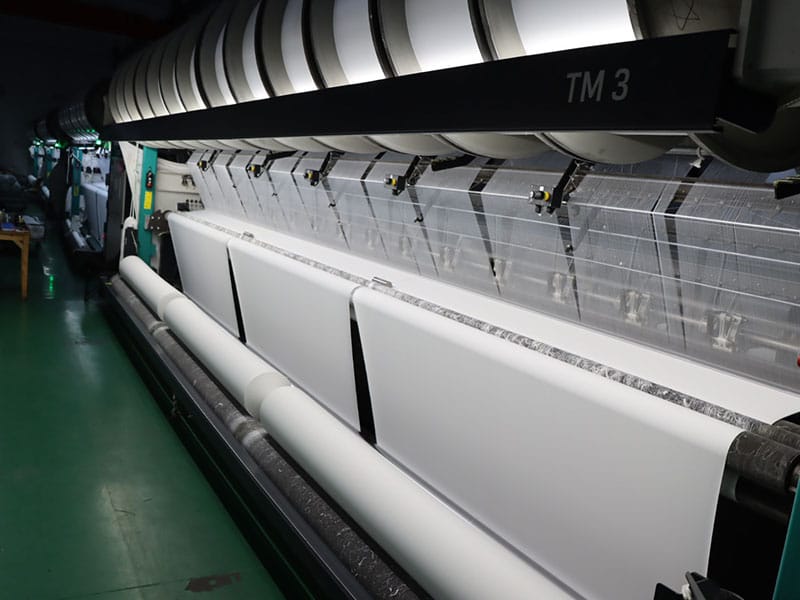
Fiber composition affects comfort, cost, care, strength, appearance, and suitability for different applications.
The following comparison can help buyers create an initial sourcing shortlist, although laboratory testing and physical samples are still required before bulk ordering.
Cotton Woven Textile Fabric
Cotton provides breathability, moisture absorption, a natural hand feel, and broad consumer familiarity.
It is suitable for shirts, dresses, bedding, decorative textiles, and casual products. However, shrinkage, wrinkling, colorfastness, and dimensional stability must be controlled.
Polyester Woven Textile Fabric
Polyester provides strength, dimensional stability, quick drying, color retention, and easy-care performance.
It is widely used in apparel, uniforms, bags, curtains, home textiles, and performance products. Finishing and construction should be adjusted when greater moisture management or breathability is required.
Blended Woven Textile Fabric
Blends combine properties to meet a specific price and performance target.
Cotton-polyester can balance comfort and durability, while polyester-elastane or cotton-elastane constructions add movement and recovery.
The blend ratio should be selected according to the final product, care method, desired hand feel, performance requirements, and material strategy.
| Material Direction | Main Strength | Main Limitation | Suitable Uses |
| Cotton | Breathability and natural comfort | May wrinkle or shrink | Shirts, dresses, bedding and décor |
| Polyester | Durability and easy care | Lower natural moisture absorption | Uniforms, bags, curtains and outerwear |
| Cotton-polyester | Balanced comfort and stability | Blend ratio may complicate recycling | Workwear, casual apparel and home textiles |
| Polyester-elastane | Stretch, recovery and strength | Heat may influence elastane performance | Trousers, fitted apparel and uniforms |
| Recycled polyester blend | Familiar performance with recycled content | Documentation and source must be checked | Apparel, accessories and home products |
| Jacquard construction | Built-in pattern and visual depth | Requires pattern and snagging control | Cushions, curtains, coats and decorative goods |
For a textured material designed for apparel and home applications, buyers can review XIZE’s Cotton Jacquard Fabric.
How to Choose Woven Textile Fabric for Different Products
The same woven textile fabric should not be used automatically across every product category.
Buyers need to match construction, fiber, weight, finishing, and testing requirements to the actual conditions the final product will face.
Apparel
For shirts, dresses, trousers, jackets, coats, and uniforms, evaluate:
- Drape
- Breathability
- Opacity
- Stretch
- Recovery
- Seam slippage
- Shrinkage
- Rubbing fastness
- Wash performance
- Skin comfort
The woven textile fabric should support the intended silhouette without creating unnecessary stiffness or discomfort.
Home Textiles
For curtains, cushions, bedding, table textiles, and decorative covers, compare:
- Colorfastness
- Pilling
- Abrasion
- Dimensional stability
- Light exposure
- Pattern consistency
- Cleaning requirements
Texture and pattern should remain consistent across large visible areas, especially when several fabric panels are used together.
Bags and Accessories
For totes, backpacks, travel products, storage items, and protective covers, prioritize:
- Tearing strength
- Abrasion resistance
- Seam strength
- Coating adhesion
- Water resistance
- Shape retention
- Printability
The expected product load and frequency of use should be included in the development brief.
Workwear and Commercial Products
For uniforms and high-use products, woven textile fabric should be selected according to working conditions rather than appearance alone.
Buyers may require repeated-laundering performance, color consistency, breathability, abrasion resistance, easy care, visibility properties, or specialized protective performance.
Woven Textile Fabric Buyer Checklist for 2027
Define the End Use
Explain the finished product, target customer, season, destination market, care method, expected lifespan, and selling price.
A supplier cannot recommend the correct woven textile fabric from a general product name alone.
Confirm the Technical Specification
Record:
- Composition
- Weight
- Width
- Construction
- Yarn details
- Color
- Pattern repeat
- Stretch
- Finishing
- Acceptable tolerances
Use the same specification for quotation, sampling, testing, purchasing, and bulk production.
Request Relevant Tests
Select tests according to the product risk.
Common testing areas include composition, colorfastness, shrinkage, pilling, tearing, tensile strength, abrasion, seam slippage, stretch recovery, and restricted substances.
Evaluate the Sample in Production
Cut, sew, wash, dry, press, and package the woven textile fabric under realistic manufacturing conditions.
A small hand sample may show color and touch, but it cannot reveal every cutting, sewing, shrinkage, distortion, or finishing problem.
Check Bulk Reproducibility
Ask how the manufacturer controls:
- Shade
- Width
- Weight
- Surface defects
- Pattern alignment
- Finishing
- Roll inspection
- Packaging
Confirm how differences between the approved sample and bulk woven textile fabric will be handled.
Review Documentation
Make sure certificates, test reports, invoices, packing lists, product labels, and shipping documents describe the material consistently.
This is especially important when making recycled, organic, chemical-safety, performance, or origin-related claims.
Plan Reorders Early
Discuss yarn availability, seasonal production capacity, dye-lot variation, lead time, minimum order quantities, storage, and reorder conditions.
A successful woven textile fabric should be commercially repeatable, not just attractive in the first sample.
How XIZE Supports Woven Textile Fabric Sourcing
Suzhou XIZE Textile Technology provides material solutions for apparel, home textiles, soft furnishings, bath products, toys, and customized applications.
The company’s website describes full-process control from weaving to dyeing and finishing. It also states that key parameters such as softness, colorfastness, stability, and elastic recovery are included in its quality-control process.
Buyers can begin with the textile woven fabric product page, compare the broader fabric product collection, or review custom textile fabric trends for additional product-development ideas.
For a new woven textile fabric project, provide:
- Target application
- Fiber composition
- Fabric weight
- Usable width
- Color reference
- Pattern
- Required finish
- Expected quantity
- Destination market
- Testing requirements
- Delivery schedule
This information helps the manufacturer recommend a more appropriate construction and prepare a more accurate quotation.
Project requirements can be submitted through the XIZE contact page.
FAQ About Woven Textile Fabric Trends 2027
What woven textile fabric will be popular in 2027?
Demand is likely to focus on traceable materials, durable constructions, textured jacquards, high-density polyester, comfortable stretch blends, and fabrics supported by clear testing information.
The winning option will depend on the finished product rather than one universal material trend.
Is woven textile fabric better than knitted fabric?
Woven textile fabric is often better when a product needs shape retention, dimensional stability, a tailored appearance, or controlled strength.
Knitted fabric is often preferred for softness, natural elasticity, body movement, loungewear, and stretch-focused garments.
What is the best woven textile fabric for clothing?
Cotton works well for breathable casual clothing, while polyester supports easy care, strength, and dimensional stability.
Blended woven textile fabric can balance comfort, durability, stretch, and price. The final choice should reflect garment structure, season, washing method, customer expectations, and target cost.
Will recycled woven textile fabric become more common?
Recycled materials will remain an important development direction in 2027.
However, buyers should verify recycled content, certification scope, physical performance, color consistency, minimum order quantities, and whether the woven textile fabric can be reproduced reliably at commercial scale.
How do I know whether woven textile fabric is high quality?
Begin with consistent construction, even color, correct width and weight, controlled defects, and an appropriate hand feel.
Then verify the woven textile fabric through relevant tests such as shrinkage, colorfastness, tearing, tensile strength, pilling, abrasion, stretch recovery, and seam slippage.
What information should I send a woven fabric manufacturer?
Send the product application, fiber composition, fabric weight, usable width, color or Pantone reference, pattern, stretch requirement, finishing, order quantity, destination market, testing requirements, target price, and delivery schedule.
The more specific the information is, the easier it becomes for the manufacturer to recommend a suitable woven textile fabric.
Can a supplier customize woven textile fabric in small quantities?
Some manufacturers support sampling or smaller pilot runs, but minimum quantities depend on yarn availability, weaving, dyeing, printing, finishing, color, and pattern requirements.
Ask separately about sample MOQ, bulk MOQ, development charges, color surcharges, lead time, and repeat-order conditions.
Is jacquard woven textile fabric more durable than printed fabric?
Jacquard patterns are built into the fabric structure, so their visual effect does not depend only on surface printing.
However, overall durability still depends on fiber type, yarn strength, density, finishing, snag resistance, colorfastness, care method, and final application.
Which tests should I request before ordering bulk fabric?
The test plan should match the finished product.
Common requests include:
- Fiber composition
- Shrinkage
- Rubbing colorfastness
- Washing colorfastness
- Tearing strength
- Tensile strength
- Seam slippage
- Pilling
- Abrasion
- Restricted substances
- Functional finish performance
Not every woven textile fabric requires every test, so buyers should prioritize the risks most relevant to the product.
How can I reduce risk when importing woven textile fabric?
Approve a detailed specification and physical sample, use measurable tolerances, request relevant reports, confirm packaging and roll inspection, and run a pilot order when possible.
Buyers should also define how quality differences, delayed deliveries, incorrect documentation, or bulk deviations will be resolved before paying for mass production.
Final Thoughts
Woven textile fabric trends in 2027 will be shaped by more than color and pattern.
The strongest fabric programs will combine structure, comfort, durability, responsible material choices, traceability, reliable testing, flexible development, and repeatable production.
Buyers should avoid selecting woven textile fabric from appearance or price alone. A successful material must perform during cutting, sewing, cleaning, daily use, shipping, compliance review, and repeat ordering.
By defining the end use first and then comparing composition, construction, finishing, test data, order flexibility, and supplier capability, brands can select woven textile fabric that supports both product quality and long-term commercial growth.