
Table of Contents
Introduction

Choosing fleece fabric for blankets is more complicated than finding the softest sample in a supplier’s collection. A blanket has a large fabric surface, experiences repeated washing and friction, and is often purchased primarily for warmth, softness, appearance, and long-term comfort. Small differences in fabric construction can therefore become very noticeable in the finished product.
For blanket manufacturers, home textile brands, wholesalers, importers, and private-label product developers, important sourcing factors include GSM, pile height, knitting density, fiber composition, usable width, pilling resistance, colorfastness, dimensional stability, printing compatibility, hand feel, and consistency between production batches.
The correct fleece fabric also depends on what kind of blanket is being developed. A lightweight travel throw, children’s printed blanket, winter bed blanket, promotional fleece blanket, or premium plush throw will not require exactly the same construction.
Xize Textile focuses on polyester warp- and weft-knitted fabrics, including coral fleece, polar fleece, flannel, and other plush materials for home textiles and related applications. Its polyester fabric collection provides buyers with different structures that can be matched to specific end uses rather than selecting material by appearance alone.
This guide explains how professional buyers can evaluate fleece fabric for blankets and develop clearer specifications before sampling and bulk production.
Start With the Type of Blanket You Want to Make
The most important sourcing question is not “Which fleece fabric is best?”
It is:
“What type of blanket are we making?”
The application determines almost every technical decision that follows.
A lightweight travel blanket may need low bulk, good warmth-to-weight performance, easy folding, and quick drying. A premium winter blanket may place greater emphasis on dense pile, softness, visual volume, and a warmer hand feel.
Typical fleece blanket categories include:
- lightweight throws
- winter bed blankets
- children’s blankets
- baby blankets
- travel blankets
- sofa throws
- promotional blankets
- printed seasonal blankets
- plush comfort blankets
Before contacting a fabric manufacturer, define the intended retail positioning, dimensions, target weight, season, consumer group, and required surface appearance.
This gives the supplier a much stronger foundation for recommending a suitable fleece fabric.
Understand the Main Types of Fleece Fabric
“Fleece” is a broad commercial term rather than one fixed textile specification.
Different fleece constructions can deliver very different results.
Polar Fleece
Polar fleece normally has a relatively compact brushed surface. It is widely used for garments, blankets, accessories, and other warm textile products.
For blankets, polar fleece can be useful when buyers want:
- practical warmth
- relatively low bulk
- easy handling
- clean surface appearance
- good versatility
It is particularly suitable for lightweight throws, travel blankets, promotional products, and multipurpose fleece blankets.
For a deeper comparison of polar and plush fleece structures, buyers can also review Xize’s guide to polar fleece vs coral fleece.
Coral Fleece
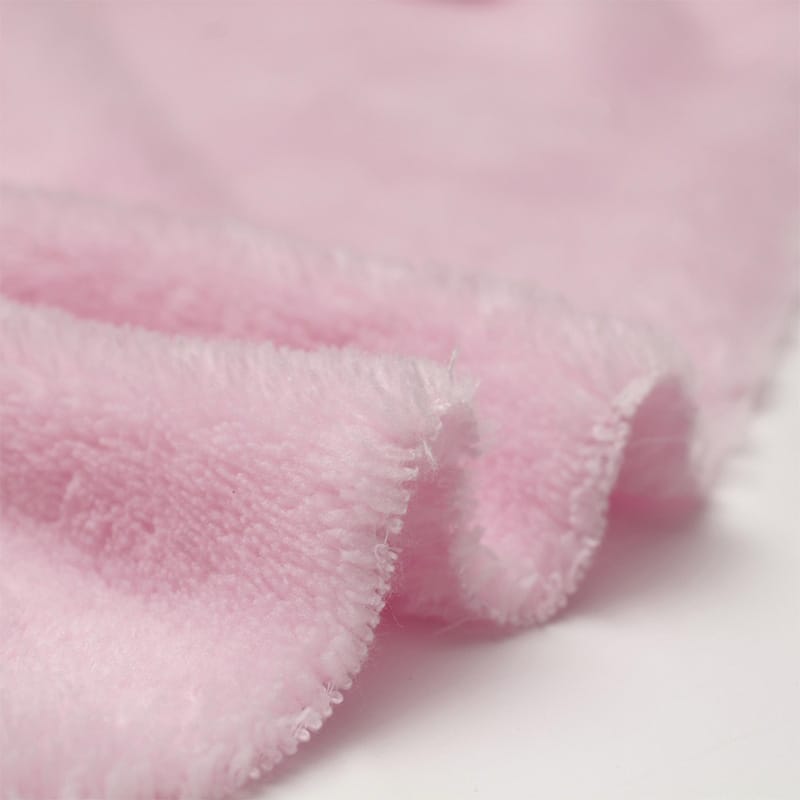
Coral fleece generally offers a deeper, more plush pile than conventional polar fleece.
It is frequently selected for:
- winter blankets
- children’s blankets
- home throws
- pajamas
- robes
- comfort-focused home textiles
The longer surface fibers produce greater visual volume and a softer tactile experience.
This makes coral fleece particularly attractive when softness is one of the main selling points of the finished blanket.
Other Plush Polyester Fabrics
Depending on the design, buyers may also evaluate flannel-style fleece, velvet-like constructions, short plush, or other polyester pile fabrics.
The correct material depends on whether the finished product should look compact, fluffy, silky, textured, embossed, or printed.
Xize’s current manufacturing system covers a broad range of polyester fleece styles and integrated processes including weaving, dyeing, finishing, printing, embossing, and related surface development.
GSM Is One of the Most Important Blanket Specifications
GSM means grams per square meter and describes fabric weight per unit area.
For fleece blankets, GSM strongly influences:
- total blanket weight
- perceived warmth
- thickness
- drape
- shipping volume
- product positioning
- fabric consumption
A lightweight fleece may work well for travel blankets or promotional throws, while a heavier construction can create the substantial feel expected from winter home textiles.
However, buyers should avoid treating higher GSM as automatically better.
Two fabrics with the same GSM may have very different:
- density
- pile height
- loft
- softness
- thermal behavior
For example, a compact 260 GSM polar fleece can feel quite different from a 260 GSM long-pile coral fleece.
The GSM therefore needs to be evaluated together with the fabric structure.
How GSM Changes the Finished Blanket
Consider a blanket measuring 150 × 200 cm.
Its surface area is approximately 3 square meters.
Ignoring trimming and processing differences for a moment:
| Fabric GSM | Approx. Fabric Weight for 150 × 200 cm |
|---|---|
| 180 GSM | 540 g |
| 220 GSM | 660 g |
| 250 GSM | 750 g |
| 300 GSM | 900 g |
| 350 GSM | 1,050 g |
This simple calculation shows why GSM matters commercially.
An increase from 220 GSM to 350 GSM can add almost 400 grams of material to a blanket of the same dimensions.
That affects:
- carton weight
- freight
- storage
- consumer handling
- retail presentation
A heavier blanket may communicate warmth and substance, but excessive weight can make a product uncomfortable or inefficient.
The correct specification should reflect the target market.
Warmth Depends on More Than Fabric Weight

One of the most common sourcing mistakes is assuming that the heaviest fleece will always be the warmest.
Fabric weight matters, but thermal performance is also influenced by how much air the structure can trap.
A fleece with good loft and an appropriate pile can create insulating air spaces without requiring extreme weight.
Warmth can therefore be influenced by:
- GSM
- pile height
- pile density
- knitting structure
- yarn characteristics
- brushing
- loft
- blanket construction
This means two 300 GSM fabrics can provide different thermal experiences.
Buyers should evaluate real samples rather than relying on GSM alone.
For a winter blanket, a combination of sufficient mass, good loft, dense construction, and stable pile is generally more useful than simply maximizing fabric weight.
Check Pile Height and Surface Character
Pile height is especially important in plush blanket fabrics.
Shorter pile tends to provide:
- cleaner appearance
- lower bulk
- easier printing
- simpler sewing
- easier packaging
Longer pile tends to create:
- stronger plushness
- higher visual volume
- warmer tactile feel
- more luxurious softness
However, long pile can also introduce challenges.
These may include:
- increased lint
- pile compression
- directional appearance
- slower drying
- more difficult sewing
- reduced print definition
The longest pile is therefore not always the best choice.
The buyer should determine whether the blanket is intended to feel compact and practical or deep and luxurious.
Density Is Different From GSM
Fabric density describes how compactly the structure is formed.
This factor is sometimes overlooked because GSM is easier to compare on a specification sheet.
However, density can strongly influence:
- durability
- opacity
- dimensional stability
- surface support
- warmth
- pilling
- sewing behavior
A loosely knitted fleece may achieve a certain GSM through long pile while still having a relatively open base construction.
Another fleece may have the same GSM but a denser foundation.
When inspecting a fleece sample, gently stretch it and look at the base structure.
If the ground fabric opens too easily or appears unstable, this may affect long-term performance.
For blanket production, the surface should feel soft without sacrificing structural stability.
Softness Must Be Defined More Clearly
Most blanket buyers ask for “soft fleece.”
But softness can mean different things.
Some buyers prefer:
- silky softness
- fluffy softness
- dense velvety softness
- dry warm softness
- smooth softness
This distinction matters because different yarns and finishing processes create different tactile effects.
Hand feel can be affected by:
- filament fineness
- yarn type
- brushing intensity
- pile length
- fabric density
- finishing agents
- heat setting
- washing treatment
The best way to communicate hand feel is through an approved physical reference sample.
A written specification can define measurable properties, while the physical sample establishes the tactile benchmark.
Pilling Resistance Is Essential for Blanket Fabric
Blankets experience repeated friction against:
- clothing
- bedsheets
- sofas
- skin
- washing machines
- other textiles
This makes pilling performance particularly important.
Pilling occurs when loose fibers become tangled and form small balls on the surface.
Poor pilling resistance can quickly make an otherwise attractive blanket look worn.
For repeat-use home textiles, buyers should request appropriate pilling testing before confirming bulk fabric.
Anti-pilling performance can be influenced by:
- yarn
- fiber
- knitting density
- brushing
- finishing
- surface structure
A new fabric sample may look perfect even when its long-term pilling resistance is poor.
This is why testing after abrasion and washing is more useful than visual inspection alone.
Wash the Sample Before Approving It
A fleece sample should not be approved only in its new condition.
Blankets are washable products, so the fabric needs to be evaluated after laundering.
Check:
- softness
- shrinkage
- pilling
- pile direction
- color
- dimensional stability
- surface matting
- lint
- overall appearance
Ideally, wash testing should reflect the recommended care instructions for the finished blanket.
This is also important for products entering regulated consumer markets. In the United States, the FTC explains that most textile household products, including blankets and throws, are covered by textile labeling requirements, and manufacturers or importers also need to provide appropriate care instructions for covered products.
Fabric selection and product labeling should therefore be considered together during development.
Shrinkage Can Change the Finished Blanket Size
Imagine a blanket specified as 150 × 200 cm.
Even modest shrinkage can reduce its dimensions after washing.
This may create problems when:
- retailers advertise exact dimensions
- blankets must fit packaging
- products are sold as matched sets
- binding and main fabric shrink differently
Buyers should measure dimensional change in both length and width.
It is also useful to compare shrinkage between:
- body fabric
- binding
- decorative trim
- backing layers
A blanket can become distorted if different components respond differently to laundering.
Check Usable Width Before Planning Blanket Sizes
Fabric width can have a major impact on blanket manufacturing.
A supplier may specify a nominal width, but the usable width available for cutting can be slightly smaller.
For blankets, this becomes particularly important because the finished products themselves are wide.
Before confirming a fleece fabric, check:
- total width
- usable width
- edge quality
- finishing allowance
- required blanket width
If the usable fabric width is too narrow, the manufacturer may need to change:
- blanket dimensions
- cutting orientation
- fabric specification
- construction
For many blanket programs, selecting an appropriate fabric width early can reduce waste and simplify production.
Calculate Fabric Yield Before Comparing Suppliers
Unit fabric price does not tell the full sourcing story.
Imagine Supplier A provides a lower-priced fleece with a narrower usable width.
Supplier B provides a slightly different quotation but a wider fabric that improves blanket cutting yield.
The second fabric may ultimately produce a more efficient finished product.
Professional comparisons should therefore consider:
- GSM
- usable width
- fabric utilization
- defect allowance
- cutting waste
- packing volume
rather than relying only on price per kilogram or meter.
This becomes particularly important for high-volume blanket programs.
Printing Compatibility Depends on Surface Structure
Printed fleece blankets are common in:
- children’s collections
- seasonal products
- promotional merchandise
- home décor
- holiday ranges
However, not every fleece surface reproduces artwork in the same way.
Shorter pile generally maintains sharper visual definition.
Long, fluffy pile can make small details appear softer because fibers move and partially cover parts of the design.
This does not mean long-pile fleece cannot be printed.
Instead, artwork should be designed around the textile surface.
Patterns that often work well include:
- large florals
- animal motifs
- geometric patterns
- children’s graphics
- seasonal designs
- abstract patterns
Very fine text, narrow lines, and extremely small motifs should be tested before bulk production.
Xize supports printing and other surface treatments through its custom fabric development service, allowing pattern, color, fabric weight, texture, and finishing requirements to be considered together.
Solid Color Fleece Can Still Be Highly Differentiated
Printing is not necessary for every blanket collection.
Solid-color fleece can create strong products when differentiation comes from:
- pile
- texture
- embossing
- jacquard
- color palette
- edge treatment
- blanket construction
A retailer may develop one core fleece specification and offer it in multiple seasonal colors.
This can simplify:
- quality control
- production
- inventory planning
- repeat ordering
while still creating a broad commercial collection.
For private-label buyers, one standardized base fabric can be a useful strategy when the material itself has already passed performance testing.
Colorfastness Matters for Blankets
Blankets come into frequent contact with bedding, clothing, furniture, and skin.
Poor colorfastness can lead to:
- fading
- staining
- rubbing transfer
- uneven appearance
Depending on the final market and use, buyers may consider testing colorfastness to:
- washing
- dry rubbing
- wet rubbing
- light
Dark and highly saturated colors often deserve additional attention.
This is especially relevant for:
- navy
- black
- red
- burgundy
- deep green
- dark brown
Xize states that its quality-control system evaluates factors including softness, color fastness, stability, and other key performance parameters throughout production.
Consider Fiber Content and Labeling
Many commercial fleece blanket fabrics are made from polyester.
For international brands, the actual fiber content should be clearly documented.
In the United States, FTC guidance states that covered textile products generally require disclosure of fiber content, country of origin, and the identity of the manufacturer or another responsible business. Blankets, throws, bedding, and fabrics are among the products covered by these textile-labeling requirements.
For sourcing teams, this makes supplier documentation important.
Buyers should confirm that the fiber specification used during development matches the information intended for the finished-product label.
What About Recycled Polyester Fleece?
Some brands may also consider recycled polyester as part of their material sourcing strategy.
If recycled content is required, buyers should not rely solely on verbal claims.
Relevant documentation and certification requirements should be established during sourcing.
Textile Exchange explains that the Global Recycled Standard and Recycled Claim Standard establish third-party requirements for recycled content and chain of custody.
Textile Exchange also published an updated polyester life-cycle assessment in June 2026 covering virgin polyester and both thermomechanical and chemical recycling production systems.
For brands developing recycled fleece blankets, the sourcing brief should therefore identify:
- required recycled percentage
- certification requirement
- transaction documentation
- labeling expectations
- target performance
Recycled content should be treated as a traceable specification rather than a marketing adjective.
Do Not Ignore Blanket Edge Finishing
Fabric selection and edge construction need to work together.
Common blanket edge methods include:
- folded hem
- overlock
- binding
- decorative stitching
A very thick fleece may create bulky folded edges.
Long pile may interfere with stitching visibility.
A light polar fleece may work well with simple overlock finishing, while a premium plush blanket may use binding or decorative edging.
During sample development, the manufacturer should make at least one complete edge section so the buyer can evaluate:
- appearance
- seam bulk
- durability
- pile trapping
- edge flatness
The finished blanket should be evaluated as a product rather than only as raw fabric.
Check Pile Direction Before Cutting
Fleece surfaces can reflect light differently depending on pile direction.
If two blanket panels or components are cut in opposite directions, they may appear to be different shades even if they came from the same dye lot.
For simple one-piece blankets, this issue is relatively easy to control.
It becomes more important when the product contains:
- multiple panels
- pockets
- decorative sections
- matched pillowcases
- reversible components
Cutting direction should therefore be defined during sample development.
Bulk Consistency Matters More Than One Perfect Sample
A good sample is only useful if the supplier can reproduce it.
For repeat blanket programs, buyers should establish acceptable tolerances for key specifications.
| Quality Parameter | What to Control |
|---|---|
| Fiber composition | Matches approved specification |
| GSM | Within agreed tolerance |
| Usable width | Stable across production |
| Color | Matches approved standard |
| Pile | Consistent height and direction |
| Hand feel | Matches approved sample |
| Density | Stable construction |
| Shrinkage | Within agreed range |
| Pilling | Meets required performance |
| Printing | Stable color and registration |
| Surface | No unacceptable defects |
| Packaging | Avoids excessive pile compression |
If one production batch feels noticeably different from another, retailers may receive customer complaints even when the nominal composition and GSM are identical.
For this reason, an approved master sample should be kept as a production reference.
What Buyers Should Request During Sampling
A useful fleece fabric development process should include more than one small swatch.
Ask for sufficient material to evaluate:
- hand feel
- width
- GSM
- color
- pile
- washing
- cutting
- sewing
- final blanket appearance
If the program is large, a complete prototype blanket is preferable.
This allows the buyer to judge:
- total weight
- warmth
- drape
- dimensions
- edge construction
- packaging
- consumer feel
A material that seems ideal as a 20 × 20 cm sample can feel completely different when converted into a 150 × 200 cm blanket.
A Better Fleece Blanket RFQ
Instead of sending:
Need fleece fabric for blankets. Please send quotation.
A professional sourcing inquiry can look like this:
Product: winter throw blanket
Material: polyester fleece
Finished size: 150 × 200 cm
Target GSM: 280–320 GSM
Surface: soft plush pile
Color: custom solid colors
Width: sufficient for one-piece blanket cutting
Requirements: low pilling, good colorfastness, stable shrinkage
Finishing: soft hand feel
Quantity: 8,000 blankets per color
Market: North America
Request: fabric sample and finished blanket prototype
This gives the manufacturer enough information to recommend a meaningful construction.
Common Mistakes When Buying Fleece Fabric for Blankets
Selecting Only by Softness
A very soft new fabric may still pill, shed, shrink, or lose its surface quality after washing.
Softness should be evaluated together with durability.
Assuming Higher GSM Means Higher Quality
GSM indicates fabric mass, not overall quality.
Density, yarn, pile, finishing, and production consistency also matter.
Ignoring Usable Width
This can create unnecessary cutting waste or force changes to blanket dimensions.
Approving Without Washing
Many surface problems appear only after laundering.
Choosing Artwork Before Testing the Surface
Fine patterns may not reproduce well on deep pile.
Ignoring Packaging Compression
Plush blankets can be compressed during transport. Buyers should check whether the pile recovers after unpacking.
Comparing Different Fabrics Only by Unit Price
A meaningful commercial comparison requires similar GSM, width, construction, finish, testing, and quality standards.
Recommended Selection by Blanket Type
| Blanket Type | Suitable Direction |
|---|---|
| Lightweight travel blanket | Compact polar fleece |
| Promotional blanket | Practical lower-to-mid GSM fleece |
| Winter bed blanket | Higher-GSM fleece with good loft |
| Plush home throw | Coral fleece or plush fleece |
| Children’s printed blanket | Soft printable fleece |
| Premium comfort blanket | Dense plush fleece with controlled pile |
| Multipurpose household throw | Medium-GSM polar or coral fleece |
These are starting points rather than fixed rules.
Physical sampling should always confirm the final decision.
How Xize Supports Fleece Blanket Development
For blanket projects, selecting a base fabric is only one part of development.
The material must also be coordinated with:
- weight
- width
- pile
- color
- printing
- surface finishing
- final application
Xize Textile operates a full-chain polyester fabric manufacturing system covering weaving, dyeing, finishing, quality control, and custom development. Its current product portfolio includes coral fleece, flannel, and other polyester plush materials for global home textile and related markets.
Buyers can use Xize’s custom fabric solution process to communicate the intended blanket application, target hand feel, GSM, color, pattern, processing requirements, and sample expectations before production.
For buyers who first want to compare available material directions, the Xize fabric collection provides a broader view of its polyester warp- and weft-knitted products.
FAQ
What fleece fabric is best for blankets?
The best fleece fabric depends on the blanket’s intended use. Polar fleece is useful for practical, relatively lightweight blankets, while coral fleece and other plush constructions are often preferred for soft winter throws and comfort-focused home textiles.
What GSM is good for a fleece blanket?
There is no single ideal GSM. Lightweight blankets can use lower-GSM materials, while winter blankets often use heavier constructions. Buyers should consider total blanket weight, pile, density, warmth, and intended use together.
Is coral fleece good for blankets?
Yes. Coral fleece is widely suited to blankets because of its plush surface, soft hand feel, and warm appearance. Pilling, shedding, GSM, shrinkage, and pile consistency should still be checked before bulk production.
Is polar fleece good for blankets?
Yes. Polar fleece works particularly well for lightweight throws, travel blankets, promotional blankets, and general warm household products where moderate bulk and practical handling are desirable.
Does fleece fabric pill?
Fleece can pill through repeated friction and washing. Actual performance depends on yarn quality, fabric construction, brushing, density, and finishing. Buyers should test pilling resistance before approving bulk fabric.
Can fleece fabric be printed?
Yes. Many fleece fabrics can be printed, but pattern clarity depends on pile height and surface structure. Shorter pile generally reproduces finer artwork more clearly than deep plush surfaces.
Should fleece blanket fabric be washed before approval?
Yes. Sample washing helps buyers evaluate shrinkage, softness, pile condition, color, pilling, lint, and dimensional stability under realistic use conditions.
Can fleece blankets use recycled polyester?
Yes, depending on the fabric and supplier capabilities. If recycled content is required, buyers should define the percentage, certification, documentation, and labeling requirements during sourcing rather than relying only on a general recycled-material claim.
Conclusion
Choosing fleece fabric for blankets requires balancing comfort, warmth, appearance, manufacturing efficiency, and long-term product performance.
GSM is important, but it should never be evaluated alone. Pile height, density, hand feel, pilling resistance, shrinkage, colorfastness, usable width, printing compatibility, sewing behavior, and batch consistency all influence the commercial quality of the finished blanket.
Polar fleece can provide practical warmth and relatively controlled bulk, while coral fleece and other plush structures can create the deeper softness expected from premium comfort blankets. Neither option is universally better; the correct material depends on the intended product.
For professional buyers, the most reliable process is to define the blanket first, translate those requirements into measurable fabric specifications, evaluate physical samples, perform wash and performance testing, and then approve a finished prototype before bulk production.
Brands, wholesalers, and blanket manufacturers developing polyester home textile products can explore Xize’s polyester fleece fabric collection or use its custom fabric development service to match fabric weight, pile, width, color, printing, and finishing to a specific blanket project.