
Table of Contents
Key Takeaways
- Never approve woven textile fabric by appearance and hand feel alone.
- Fiber composition, weight, usable width, weave density, color, shrinkage, strength, and finishing should be written into the specification.
- Sample approval and bulk fabric inspection are two different quality-control stages.
- Colorfastness, dimensional stability, breaking strength, tearing strength, and seam behavior should be tested according to the intended application.
- Apparel, home textiles, bags, uniforms, and decorative products require different performance priorities.
- A good supplier should be able to reproduce approved fabric specifications consistently across production batches.
- Quality documents should match the physical fabric, purchase specification, labels, and final application.
- The most effective inspection process combines measurable test data with practical cutting, sewing, washing, and end-use evaluation.
Choosing an attractive woven textile fabric is only the first step in textile sourcing. The more difficult task is determining whether that fabric can maintain the same appearance, dimensions, strength, color, hand feel, and processing performance when production moves from a small sample to hundreds or thousands of meters.
This difference matters because a fabric sample may look excellent on a desk but behave very differently during cutting, sewing, washing, finishing, or repeated use.
For apparel brands, home textile manufacturers, importers, wholesalers, product developers, and OEM projects, fabric quality should therefore be defined through measurable specifications rather than subjective descriptions such as “premium,” “strong,” “soft,” or “high quality.”
This guide explains how to evaluate woven textile fabric quality before bulk production and how to build a practical inspection system that reduces quality variation and sourcing risk.
If you are researching the broader direction of the market before selecting materials, first read our previous guide to Woven Textile Fabric Trends 2027.
Why Woven Textile Fabric Quality Is More Than Appearance
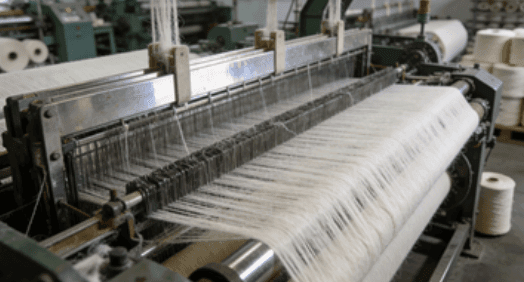
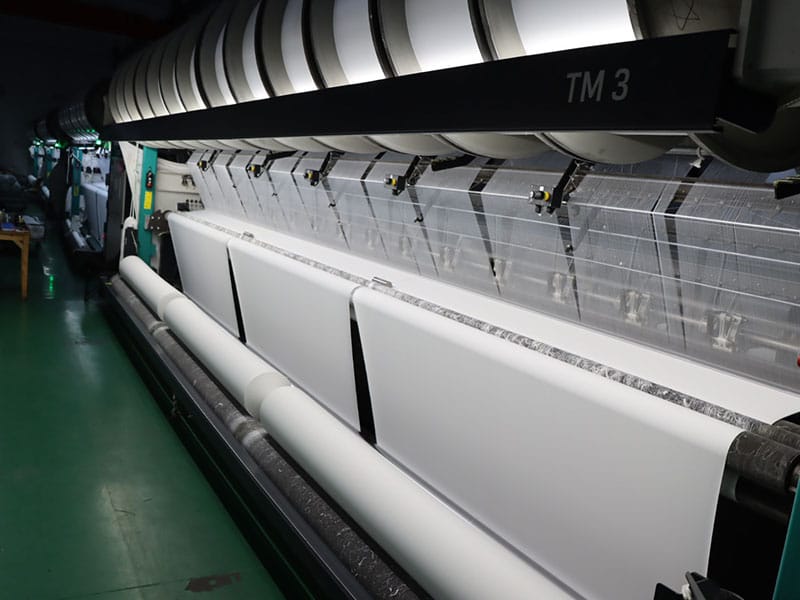
Woven textile fabric is formed by interlacing warp and weft yarns. Changes in fibers, yarn count, yarn twist, density, weave structure, dyeing, finishing, and production tension can significantly influence finished performance.
Two fabrics can therefore look almost identical but behave differently during manufacturing.
One may shrink after washing. Another may show excessive shade variation. A third may tear around seams even though the surface appears strong.
Visual Quality
Visual quality includes color uniformity, pattern alignment, surface cleanliness, weave consistency, and the absence of obvious defects.
These characteristics are important because many problems can be identified quickly during roll inspection. However, visual inspection cannot prove strength, shrinkage, composition, or long-term color performance.
Physical Quality
Physical quality describes measurable characteristics such as weight, width, density, tensile strength, tearing strength, abrasion resistance, stretch, and dimensional stability.
These properties determine whether the woven textile fabric can survive production and actual use.
Chemical and Finishing Quality
Dyeing and finishing can change color, softness, water behavior, wrinkle resistance, surface texture, and other functional characteristics.
When a product is intended for direct skin contact or regulated markets, chemical safety and the suitability of the applied finish should also be considered. OEKO-TEX STANDARD 100 is one established certification system for textiles tested for harmful substances.
1. Confirm Woven Textile Fabric Fiber Composition
Fiber composition is one of the first specifications to verify because it influences comfort, strength, moisture behavior, care requirements, dyeing performance, and durability.
Common woven textile fabric compositions include:
- Cotton
- Polyester
- Nylon
- Viscose
- Linen
- Polyester-cotton
- Cotton-elastane
- Polyester-elastane
- Recycled polyester blends
Why Composition Accuracy Matters
A fabric described as 100% cotton will behave differently from a cotton-polyester blend.
Similarly, adding even a small percentage of elastane can affect stretch, recovery, heat sensitivity, cutting, sewing, and washing behavior.
The composition shown on the test report should therefore match the specification, purchase documentation, and finished-product label.
Avoid Visual Guessing
Fiber composition should not be determined simply by touching the material.
Modern spinning and finishing techniques can make polyester feel cotton-like or make blended materials resemble pure natural fibers.
When composition is commercially or legally important, laboratory verification is more reliable than visual judgment.
2. Check Fabric Weight and Usable Width
Weight and width directly affect product performance, material consumption, cutting efficiency, and production planning.
For woven textile fabric, weight is commonly expressed in grams per square meter, while width should distinguish between total roll width and usable fabric width.
Fabric Weight
Fabric weight influences structure, drape, opacity, durability, warmth, and hand feel.
A lightweight woven textile fabric may be suitable for shirts or summer apparel, while denser materials may work better for jackets, bags, upholstery, curtains, or uniforms.
However, heavier does not automatically mean better.
The appropriate weight depends on the intended product.
Usable Width
Usable width is the part of the fabric that can actually be cut into finished components.
Edges, selvages, distortion, coating variation, or printing limitations may reduce the usable area.
A small width difference across a large order can significantly affect fabric consumption.
Define a Tolerance
Instead of specifying only “150 cm width,” establish an acceptable tolerance.
For example:
Usable width: 150 cm ± agreed tolerance
The tolerance should be agreed with the manufacturer before production begins.
3. Examine Weave Density and Structural Consistency
Weave density describes how closely yarns are arranged within the fabric.
It affects strength, breathability, opacity, dimensional stability, surface appearance, and resistance to deformation.
Warp Density
Warp yarns run along the length of woven textile fabric.
Variation in warp density may produce uneven appearance, weak areas, dimensional instability, or inconsistent performance.
Weft Density
Weft yarns run across the width.
Incorrect weft density may alter fabric weight, texture, shrinkage, pattern dimensions, and mechanical strength.
Balanced Construction
A technically suitable woven textile fabric does not necessarily need the highest possible density.
Extremely dense structures may improve strength or wind resistance but can reduce breathability or change hand feel.
The correct construction is the one that achieves the performance required by the final product.
XIZE’s High Density Polyester Fabric is one example of how dense woven construction can be used where structural stability and strength are important. XIZE presents the material for apparel, home textile, bag, outdoor, and specialty applications.
4. Inspect Woven Textile Fabric Surface Defects
Bulk rolls should be inspected systematically rather than checking only several meters from the beginning of the roll.
Surface defects may originate from yarn problems, loom settings, dyeing, finishing, transportation, or handling.
Common Woven Fabric Defects
Watch for:
- Broken yarns
- Missing yarns
- Double yarns
- Thick places
- Thin places
- Slubs
- Oil marks
- Dye stains
- Creases
- Holes
- Snags
- Uneven selvages
- Bowing
- Skewing
- Pattern distortion
- Shade variation
What Is Bowing?
Bowing occurs when filling yarns or horizontal design lines curve across the width instead of remaining straight.
This may cause visible distortion after cutting, particularly in stripes, checks, geometric patterns, and structured home textiles.
What Is Skewing?
Skewing occurs when the weft direction shifts diagonally relative to the warp.
Even moderate skew can create garment twisting, pattern misalignment, or uneven finished panels.
Patterned Fabrics Need Extra Attention
Jacquard, checks, stripes, and repeated patterns require additional inspection because even a structurally acceptable fabric may create cutting difficulties when the repeat is distorted.
For decorative applications, XIZE’s Cotton Jacquard Fabric provides a useful example of a patterned material where pattern clarity, surface consistency, color, and dimensional behavior all need to be controlled together.
5. Evaluate Color and Shade Consistency
Color problems are among the easiest fabric defects for customers to notice.
A woven textile fabric may technically pass several physical tests but still become unsuitable for production if color differs noticeably between rolls or within the same roll.
Roll-to-Roll Shade Variation
Compare multiple rolls under controlled lighting conditions.
Do not assume the first approved roll represents the entire production lot.
For large orders, shade grouping can help prevent visibly different panels from being used in the same finished product.
Center-to-Selvage Variation
Color should also be compared across the width.
A fabric may appear darker in the center and lighter near the edges because of dyeing or finishing variation.
Lot-to-Lot Variation
Repeat orders may involve new yarn lots or dye lots.
Brands that require strict color continuity should maintain approved standards and clearly define acceptable color tolerances.
6. Test Woven Textile Fabric Colorfastness
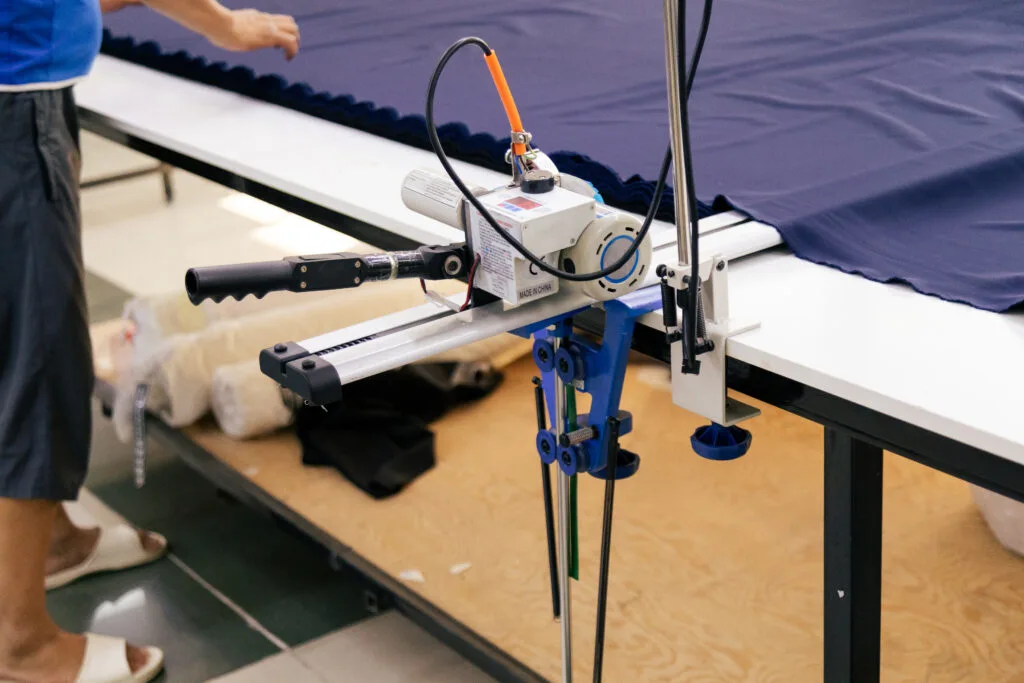
Colorfastness describes how well a dyed or printed textile retains its color or resists transferring color under specific conditions.
Different end uses require different types of colorfastness.
Colorfastness to Rubbing
Rubbing tests evaluate whether color transfers from the textile surface to another material.
Both dry and wet rubbing conditions may be tested.
ISO 105-X12 specifies a method for determining the resistance of textile color to rubbing and staining other materials. The standard is applicable to textile fibers in yarn or fabric form. View ISO 105-X12.
Colorfastness to Washing
This is particularly important for garments, bedding, reusable home textiles, uniforms, and other washable products.
The required performance should correspond to the actual care conditions.
Colorfastness to Light
Curtains, decorative textiles, outdoor applications, and products exposed to sunlight may require greater resistance to fading.
A fabric that performs well during washing may still perform poorly under prolonged light exposure.
Specify the Test, Not Just “Good Colorfastness”
A sourcing specification should avoid vague language such as:
“Fabric must have good colorfastness.”
A more useful specification identifies:
- Test method
- Dry or wet condition
- Required grade
- Number of washes
- Relevant colors
- End-use conditions
This gives both the buyer and manufacturer a measurable acceptance standard.
7. Measure Shrinkage and Dimensional Stability
Shrinkage can affect garment size, curtain length, cushion dimensions, seam alignment, pattern matching, and final product appearance.
A woven textile fabric should therefore be tested under realistic care conditions before bulk cutting.
Warp Shrinkage
Shrinkage in the warp direction changes fabric length.
This may affect garment length, trouser length, bedding dimensions, and long curtain panels.
Weft Shrinkage
Shrinkage in the weft direction changes fabric width.
It may influence garment circumference, cushion size, panel matching, or cutting efficiency.
Why Testing Conditions Matter
The same woven textile fabric may show different dimensional changes depending on:
- Washing temperature
- Washing cycle
- Detergent
- Drying method
- Tumble drying
- Line drying
- Ironing
- Finishing
ISO 5077 provides a method for determining dimensional change after specified washing and drying procedures. See ISO 5077.
Test Before Pattern Finalization
When shrinkage is significant, garment and product patterns may need adjustment.
For this reason, shrinkage testing should ideally occur before final size specifications and bulk cutting are locked.
8. Test Breaking and Tearing Strength
Strength should be evaluated according to how the finished product will experience force.
A bag carrying heavy contents experiences different stresses from a curtain, shirt, decorative cushion, or uniform.
Breaking Strength
Breaking strength evaluates how much force a textile can withstand before failure under a specified tensile test.
ASTM D5034 covers grab and modified-grab procedures for determining breaking strength and elongation of textile fabrics, with the modified procedure used primarily for woven fabrics. Review ASTM D5034.
Tearing Strength
Tearing strength evaluates resistance after a tear has started.
This matters for:
- Workwear
- Bags
- Outdoor products
- Uniforms
- Protective covers
- Upholstery
- High-stress apparel
ASTM D5587 is one recognized method for measuring fabric tearing strength using a trapezoid procedure.
Stronger Is Not Always Better
Maximum strength should not automatically be the target.
Increasing density, yarn thickness, coating, or stiffness may improve one property while reducing softness, drape, breathability, or sewing efficiency.
The goal is appropriate performance rather than the highest possible number.
Woven Textile Fabric Quality Testing Table
| Quality Item | What It Reveals | Common Risk if Ignored | Especially Important For |
|---|---|---|---|
| Fiber composition | Actual material content | Incorrect labeling or performance | All applications |
| Fabric weight | Mass and structural consistency | Different hand feel and performance | Apparel, home textiles |
| Usable width | Available cutting area | Higher material consumption | Mass production |
| Warp/weft density | Structural consistency | Weak or uneven fabric | Apparel, bags, uniforms |
| Surface inspection | Visible weaving/finishing defects | Finished-product rejection | All applications |
| Shade consistency | Color uniformity | Visible panel differences | Apparel, curtains, upholstery |
| Rubbing fastness | Surface color transfer | Staining and fading | Clothing, upholstery |
| Shrinkage | Dimensional change | Incorrect finished sizes | Apparel, bedding |
| Breaking strength | Resistance to tensile force | Structural failure | Workwear, bags |
| Tearing strength | Resistance to tear propagation | Rapid damage after puncture | Bags, outdoor products |
| Seam behavior | Stability around stitching | Seam opening | Garments, cushions |
| Chemical/finish checks | Treatment and safety compliance | Market or application mismatch | Skin-contact products |
9. Check Seam Slippage Before Garment Production
Fabric strength alone does not guarantee a strong seam.
Some woven textile fabric can resist tensile force but allow yarns to move away from the seam when stress is applied.
This produces visible gaps around stitching.
Why Seam Slippage Happens
Possible causes include:
- Low yarn density
- Smooth filament yarns
- Loose weave structure
- Inappropriate seam allowance
- Incorrect stitch density
- Wrong needle
- Excessive garment tension
Test the Actual Sewing Construction
A fabric laboratory test provides useful information, but production sewing trials are equally important.
Use the intended:
- Thread
- Needle
- Stitch type
- Stitch density
- Seam allowance
- Garment construction
Then apply realistic load to the sewn sample.
Apparel and Home Textiles Differ
A lightweight shirt and a fitted trouser do not place the same force on a seam.
Likewise, a decorative cushion and a heavily used upholstered product require different seam performance.
Testing should follow the real application.
10. Evaluate Abrasion and Pilling
Surface durability influences how the product looks after repeated use.
This is particularly important for woven textile fabric used in upholstery, uniforms, workwear, bags, seating, and frequently handled home textile products.
Abrasion Resistance
Abrasion testing evaluates the effect of repeated rubbing or surface contact.
A material intended for decorative curtains may require less abrasion performance than one used for seating or bags.
Pilling
Pilling occurs when fibers form small entangled balls on the fabric surface.
Fiber composition, yarn structure, surface finishing, friction, and washing can all influence pilling behavior.
Check Appearance After Testing
A numerical result should be interpreted together with surface appearance.
For products where aesthetics are important, even a technically intact fabric may be unacceptable if the surface becomes visibly fuzzy or uneven.
11. Confirm Finishing Performance
Finishing can dramatically alter woven textile fabric.
Processes may be used to create:
- Softness
- Water resistance
- Wrinkle resistance
- Brushed texture
- Coating
- Lamination
- Antistatic performance
- UV-related performance
- Flame-related performance
- Special surface effects
Finish Must Match the Application
A treatment should solve a specific product requirement.
Adding unnecessary finishing may alter:
- Hand feel
- Breathability
- Color
- Sewing behavior
- Adhesion
- Washing durability
Test Finish Durability
A finish that works before washing but disappears after several care cycles may not meet the product requirement.
When long-term performance matters, test the woven textile fabric after an agreed number of washes, cleaning cycles, abrasion cycles, or exposure conditions.
Chemical Safety and Documentation
Products intended for direct contact with skin may require additional chemical-safety documentation.
OEKO-TEX states that STANDARD 100 covers textiles tested for harmful substances from yarn through finished products. Certification scope and validity should therefore be checked rather than assuming that one certificate applies to every material produced by a manufacturer.
12. Compare Approved Samples With Bulk Woven Textile Fabric
One of the most important quality-control steps is comparing bulk production against the approved standard.
A sample is useful only when it remains identifiable and connected to a written specification.
Keep an Approved Reference Sample
The approved sample should be retained and clearly marked with:
- Fabric code
- Composition
- Color
- Weight
- Width
- Construction
- Finish
- Approval date
- Order reference
Compare Several Bulk Rolls
Do not compare only the first roll.
Select samples from different:
- Rolls
- Production positions
- Dye lots
- Dates
- Packing groups
This gives a more representative view of bulk consistency.
Bulk Consistency Matters More Than One Perfect Sample
Commercial quality is not demonstrated by producing one excellent meter of woven textile fabric.
The real test is whether the manufacturer can reproduce the agreed properties consistently across the whole order and again during future production.
Sample Approval vs Bulk Fabric Inspection
| Stage | Main Purpose | What to Check |
| Initial swatch | Material screening | Appearance, composition, basic hand feel |
| Lab dip | Color approval | Shade, tone, lighting response |
| Development sample | Technical verification | Weight, width, construction, finish |
| Test sample | Performance validation | Shrinkage, strength, colorfastness |
| Pre-production sample | Manufacturing confirmation | Cutting, sewing, washing, final appearance |
| Bulk inspection | Order acceptance | Roll consistency, defects, shade and specification |
| Reorder inspection | Repeatability | Match with previous approved standard |
The stages should not necessarily be identical for every order. A simple decorative product may need fewer tests than a uniform, bag, performance garment, or regulated textile.
How Quality Priorities Change by Application
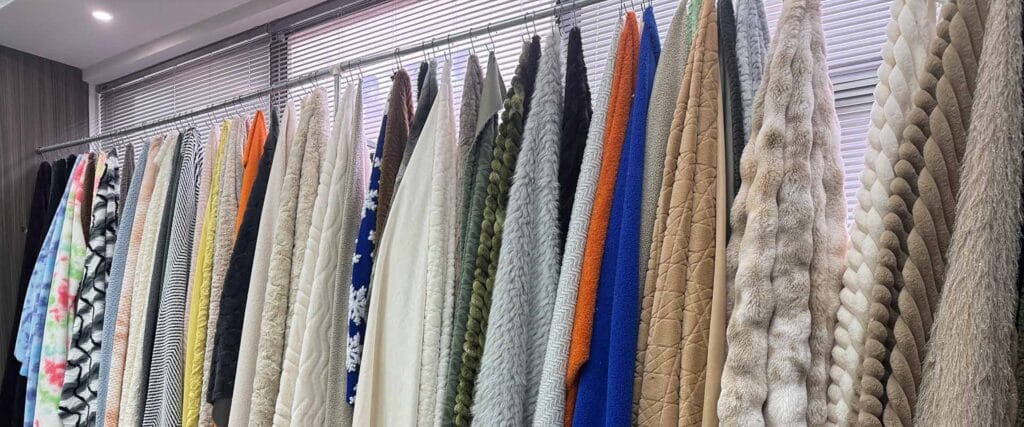
Woven textile fabric quality should always be judged relative to its final use.
There is no single fabric specification that works equally well for shirts, bags, curtains, cushions, uniforms, or outdoor equipment.
Apparel Woven Textile Fabric
For shirts, dresses, trousers, jackets, uniforms, and fashion products, prioritize:
- Hand feel
- Drape
- Breathability
- Shrinkage
- Colorfastness
- Seam slippage
- Pilling
- Stretch and recovery
- Skin-contact comfort
A fabric may be extremely strong but still unsuitable for clothing if it is stiff, heavy, or uncomfortable.
Home Textile Fabric
For curtains, cushion covers, bedding, decorative panels, and similar products, evaluate:
- Pattern alignment
- Shade consistency
- Dimensional stability
- Pilling
- Abrasion
- Light exposure
- Washing performance
- Surface appearance
Large visible surfaces make color and pattern inconsistency especially noticeable.
XIZE’s broader fabric product collection covers applications including home textiles, soft furnishings, bath products, plush goods, and apparel, which makes application-based material comparison useful during early development.
Bags and Accessories
For backpacks, totes, travel products, storage products, and covers, focus on:
- Tearing strength
- Breaking strength
- Abrasion
- Seam performance
- Shape retention
- Coating adhesion
- Water behavior
- Colorfastness
The expected load should be considered during testing.
Uniforms and Workwear
These products may experience repeated washing, friction, movement, sunlight, chemicals, or mechanical stress.
Important factors often include:
- Strength
- Abrasion
- Shrinkage
- Colorfastness
- Easy care
- Seam durability
- Breathability
- Functional finishes
Testing requirements should reflect actual working conditions.
Woven Textile Fabric vs Knitted Fabric Quality Checks
Woven and knitted fabrics should not be evaluated in exactly the same way because their structures behave differently.
| Quality Factor | Woven Textile Fabric | Knitted Fabric |
| Dimensional stability | Usually a major strength | Requires closer stretch control |
| Natural stretch | Usually limited | Usually higher |
| Seam slippage | Important | Less commonly evaluated in the same way |
| Spirality | Usually lower concern | Important for many knits |
| Stretch recovery | Relevant for stretch woven | Very important |
| Bow/skew | Important | Also relevant |
| Breaking strength | Common quality parameter | Test method depends on structure |
| Pilling | Depends on fiber/surface | Often important |
| Cutting behavior | May fray | May curl or distort |
| Main quality focus | Structure and stability | Stretch and recovery |
Buyers comparing different textile structures can also explore XIZE’s warp knitting fabrics and weft knitting fabrics to understand how construction changes material behavior.
Common Woven Textile Fabric Quality Mistakes
Approving Fabric Only by Touch
Softness can be changed through finishing.
A very soft woven textile fabric is not automatically more durable, more stable, or more suitable for the intended product.
Hand feel should be evaluated together with technical specifications.
Checking Only One Roll
One roll cannot represent a complete production lot.
Bulk inspection should cover multiple rolls, especially when shade consistency and structural uniformity matter.
Using Vague Specifications
Descriptions such as “high quality,” “standard weight,” “good colorfastness,” and “strong fabric” are difficult to enforce.
Use measurable requirements instead.
Testing Without Defining the End Use
A technically strong fabric may still be unsuitable for a specific product.
Every test should answer a practical question about how the final item will be produced, cleaned, or used.
Ignoring Sewing Tests
Some problems become visible only after the fabric reaches the sewing line.
Seam opening, puckering, needle damage, pattern misalignment, fraying, and distortion may not appear in laboratory data alone.
Treating Sample Quality as Bulk Quality
A development sample may be produced under carefully controlled conditions.
Bulk production introduces greater variation in yarn lots, dyeing, machine settings, finishing, and roll handling.
Bulk consistency must therefore be verified separately.
A Practical Woven Textile Fabric Inspection Checklist
Before confirming bulk woven textile fabric, review the following:
Material
- Is fiber composition correct?
- Does it match the label and specification?
- Are recycled or special material claims documented?
Construction
- Is fabric weight within tolerance?
- Is usable width correct?
- Are warp and weft density consistent?
- Is the weave structure correct?
Appearance
- Is the shade consistent?
- Are patterns aligned?
- Is the surface free from unacceptable defects?
- Are bow and skew controlled?
Performance
- Has shrinkage been tested?
- Does colorfastness meet the required level?
- Is strength appropriate?
- Is tearing performance sufficient?
- Does the seam remain stable?
- Is abrasion performance suitable?
Finishing
- Is the hand feel correct?
- Is the finish consistent?
- Does functional treatment survive required care cycles?
- Are relevant safety documents available?
Bulk Production
- Does bulk match the approved sample?
- Are rolls grouped by shade when necessary?
- Are production tolerances documented?
- Are inspection records traceable?
A checklist like this converts a vague quality requirement into a repeatable sourcing process.
How XIZE Supports Fabric Quality Control
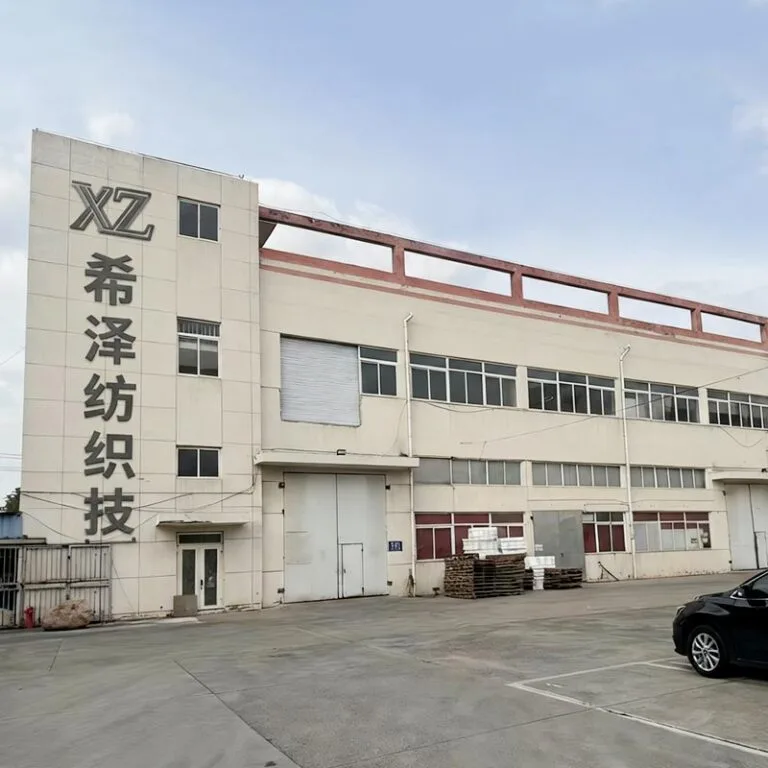
XIZE describes its production process as covering fabric development, customization, manufacturing, testing, and delivery. Its custom service process includes checking parameters such as weight, colorfastness, density, and production workmanship during quality control.
For projects requiring custom colors, patterns, textures, jacquard structures, printing, embossing, or other fabric development, buyers can review the XIZE Custom Fabric Solutions page.
The website also provides a broader Textile Woven Fabric entry point for exploring fabric solutions and related applications.
When sending a new woven textile fabric requirement, provide as much technical information as possible:
- Final product
- Fiber composition
- Target weight
- Usable width
- Color reference
- Pattern
- Construction
- Finish
- Performance requirements
- Test standards
- Order quantity
- Destination market
This information allows the manufacturer to evaluate whether an existing fabric can meet the requirement or whether customized development is more appropriate.
For project-specific development, sampling, and production discussions, specifications can be submitted through the XIZE Contact Page.
FAQ
How can I tell if woven textile fabric is high quality?
Start by checking whether composition, weight, usable width, density, color, and surface appearance match the approved specification. Then evaluate measurable performance such as shrinkage, colorfastness, breaking strength, tearing strength, seam stability, and abrasion according to the final application. Quality is consistency across these factors rather than one characteristic alone.
What are the most important tests for woven fabric?
There is no universal test package. Apparel often requires shrinkage, rubbing and washing colorfastness, seam performance, pilling, and strength tests. Bags may prioritize tearing and abrasion resistance, while curtains may require greater attention to dimensional stability, shade consistency, and light exposure. Tests should reflect actual use.
How do I check woven textile fabric before placing a bulk order?
Approve a clearly identified physical sample and written specification first. Test relevant performance properties, then perform cutting, sewing, washing, or finishing trials under realistic conditions. During bulk production, compare several rolls against the approved standard rather than inspecting only a small section of the first roll.
Why does bulk fabric sometimes look different from the approved sample?
Differences may come from yarn lots, dye lots, machine settings, weaving tension, finishing conditions, production scale, or raw-material variation. A strong quality-control system defines acceptable tolerances and compares bulk woven textile fabric against retained standards throughout manufacturing rather than relying only on the first sample.
What woven textile fabric defects should I check during inspection?
Common defects include broken or missing yarns, thick and thin areas, oil marks, stains, holes, snags, creases, uneven selvages, bowing, skewing, shade variation, and pattern distortion. The acceptable defect level should depend on the end use because a decorative surface may require stricter visual control than a hidden component.
Is heavier woven textile fabric always better quality?
No. Fabric weight should match the application. A lightweight shirt material and a heavy bag fabric serve different purposes. Increasing weight can improve opacity or structure, but may also reduce drape, softness, breathability, or comfort. Quality means meeting the intended specification consistently, not simply maximizing GSM.
What is the difference between breaking strength and tearing strength?
Breaking strength measures the force needed to cause failure when fabric is subjected to tensile loading. Tearing strength evaluates resistance to propagation after a tear has started. Both may be important for woven textile fabric, but their relevance depends on whether the final product faces general tensile loads, punctures, cuts, or localized stress.
Should I test every woven textile fabric order?
The testing scope can vary according to material, application, supplier history, order size, and risk. New fabrics, new suppliers, new colors, performance finishes, or significant specification changes generally justify closer testing. Repeat orders can use established quality records, but bulk consistency should still be verified before acceptance.
Final Thoughts
Woven textile fabric quality cannot be judged from softness, appearance, weight, or price alone.
A commercially reliable material must meet a complete set of requirements covering composition, structure, dimensions, color, mechanical performance, finishing, processing behavior, and bulk consistency.
The most effective sourcing process begins with the end product.
Once the application is clear, the required fabric specification can be translated into measurable acceptance criteria. Samples can then be tested under realistic cutting, sewing, washing, and use conditions before bulk production begins.
For apparel, home textiles, bags, uniforms, decorative products, and customized textile projects, this approach reduces the gap between an attractive sample and a successful finished product.
Combined with the market directions discussed in Woven Textile Fabric Trends 2027, quality-focused sourcing gives brands and manufacturers a stronger foundation for selecting materials that can perform reliably from development through repeat production.