
Table of Contents
Introduction
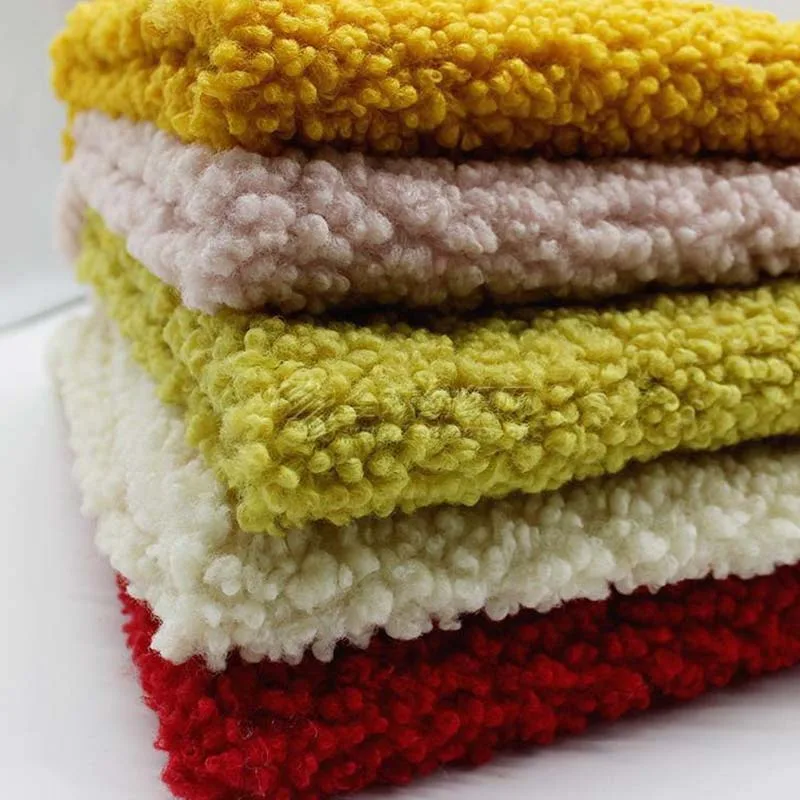
Polar fleece and coral fleece are both widely used polyester fleece fabrics, but they are not interchangeable. For textile buyers, product developers, home textile brands, apparel manufacturers, and importers, choosing between them should depend on the finished product rather than on softness alone.
Polar fleece is typically selected when buyers need a relatively lightweight, stable, insulating material for apparel, blankets, outdoor-inspired products, and general warm textiles. Coral fleece, by contrast, is usually distinguished by its longer, denser pile and highly plush hand feel, making it particularly suitable for blankets, robes, pajamas, soft furnishings, and comfort-focused products.
The differences become more important during bulk production. GSM, pile height, knitting density, brushing, pilling resistance, dimensional stability, colorfastness, cutting behavior, sewing performance, and washing results all affect whether a fleece is appropriate for a particular product.
Xize Textile specializes in polyester warp- and weft-knitted fleece fabrics and manages fabric development from weaving through dyeing, finishing, and finished-product testing. Its broader polyester fleece fabric collection provides different constructions for home textiles, apparel, toys, and other applications.
This guide compares polar fleece and coral fleece from a professional buyer’s perspective and explains how to select the right fabric before moving into bulk production.
What Is Polar Fleece?
Polar fleece is a knitted synthetic fleece fabric generally made from polyester. After knitting, the fabric undergoes brushing or napping processes that raise fibers from the surface and create a soft insulating pile.
The raised structure traps small pockets of air, helping the fabric retain warmth without requiring the weight associated with some traditional insulating materials.
A useful general overview of polar fleece describes it as a soft, napped polyester fabric commonly used for jackets, sweatshirts, pajamas, blankets, hats, and other warm textile products.
In commercial sourcing, however, “polar fleece” does not represent one fixed specification.
Polar fleece can vary substantially in:
- GSM
- pile height
- knitting density
- yarn specification
- brushing intensity
- one-sided or double-sided finishing
- anti-pilling treatment
- width
- color
- printing
- final hand feel
Two products both described as polar fleece may therefore perform very differently.
Professional buyers should always evaluate the actual technical specification rather than sourcing by material name alone.
What Is Coral Fleece?
Coral fleece is also generally produced from polyester, but its appearance and hand feel tend to be more plush than conventional polar fleece.
Its pile is usually longer and more visually pronounced, producing the dense, soft surface associated with blankets, robes, pajamas, baby textiles, and other comfort-oriented applications.
Coral fleece is particularly useful when tactile softness plays a major role in how consumers perceive the finished product.
Xize already produces a broad range of all-polyester fleece fabrics and identifies coral fleece as one of its core materials within its full-chain textile manufacturing system. The company manages weaving, dyeing, finishing, and quality inspection as part of the same production structure.
Unlike a flat polyester knit, coral fleece depends heavily on pile quality.
The finished appearance can be influenced by:
- filament fineness
- fabric density
- brushing
- pile cutting
- pile length
- heat setting
- finishing
- fabric weight
As a result, buyers should inspect both the visual surface and the underlying fabric construction.
Polar Fleece vs Coral Fleece: Main Differences
The easiest way to understand the two materials is to compare how their structures influence the finished product.
| Feature | Polar Fleece | Coral Fleece |
|---|---|---|
| Main fiber | Usually polyester | Usually polyester |
| Surface | Shorter, compact fleece | Longer, plush pile |
| Hand feel | Soft and warm | Very soft and fluffy |
| Bulk | Moderate | Generally fuller |
| Warmth | Good | Often higher at similar constructions |
| Weight range | Broad | Often medium to heavier |
| Drying | Generally quick | May require more time due to deeper pile |
| Apparel use | Very strong | More comfort-oriented |
| Blankets | Strong | Very strong |
| Outdoor-inspired apparel | Common | Less common |
| Pajamas and robes | Suitable | Particularly suitable |
| Surface definition | More compact | More luxurious/plush |
| Pilling concern | Important | Important |
| Cutting | Relatively straightforward | Pile direction needs more attention |
These are general characteristics rather than absolute rules. Actual performance depends on fabric construction.
The Biggest Difference Is Pile Structure
When buyers first compare the fabrics, softness often receives the most attention.
From a manufacturing perspective, however, pile structure is the more useful distinction.
Polar fleece normally has a more compact raised surface. Depending on the construction, the pile can feel smooth, slightly fuzzy, or relatively dense.
Coral fleece tends to have more pronounced individual fibers extending from the fabric surface. This creates greater visual depth and a more plush tactile effect.
That difference influences much more than appearance.
Pile can affect:
- heat retention
- airflow
- drying
- lint formation
- pilling
- sewing
- cutting
- printing
- packaging volume
- finished-product appearance
A longer pile may improve perceived softness, but it also needs proper manufacturing control to maintain an even surface.
For professional sourcing, “softer” should therefore never be the only acceptance standard.
Which Fabric Is Warmer?
Both fabrics can provide effective insulation because their raised polyester surfaces trap air.
However, warmth cannot be determined by the fabric name alone.
A dense 300 GSM polar fleece can perform very differently from a lightweight coral fleece. Similarly, a high-loft coral fleece may retain more warm air than a compact fleece at a similar nominal weight.
Important factors include:
- GSM
- pile height
- density
- yarn structure
- surface treatment
- garment construction
- wind exposure
Polar fleece is well known as an insulating polyester material. General technical descriptions note that higher-loft fleece traps more air, while fabric weight can also influence warmth.
For buyers, the practical lesson is simple:
Do not ask only, “Which fleece is warmer?”
Instead ask:
What GSM, pile structure, density, and finished-product construction will provide the required thermal performance?
This creates a much more useful sourcing specification.
Understanding GSM in Fleece Fabric
GSM means grams per square meter and represents the mass of the fabric.
It is one of the first values buyers should request when evaluating polar fleece or coral fleece.
A lower GSM construction may provide:
- lighter garments
- better flexibility
- lower bulk
- easier layering
A higher GSM construction may provide:
- greater substance
- stronger thermal perception
- fuller hand feel
- more suitable performance for winter blankets
However, GSM is not equivalent to quality.
A high GSM fleece with poor knitting density or unstable finishing may perform worse than a carefully engineered lighter material.
Buyers should evaluate GSM together with:
- density
- pile
- yarn
- hand feel
- dimensional stability
- intended product
For example, the GSM needed for a lightweight pajama top will usually be different from the specification used for a winter throw blanket.
Polar Fleece Is Often Better for Structured Apparel
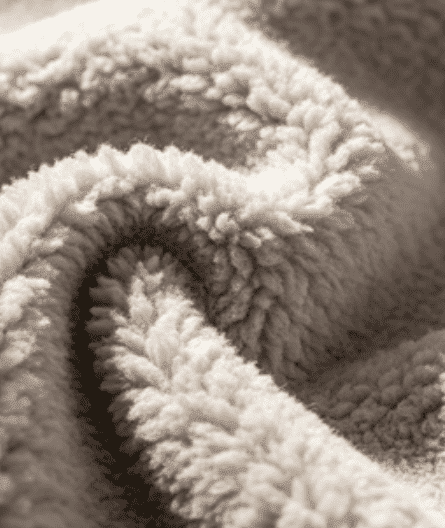
Polar fleece has become widely associated with warm garments because it can combine insulation with relatively low weight.
Typical applications include:
- jackets
- hoodies
- sweatshirts
- warm pants
- vests
- gloves
- hats
- pajamas
- base-layer accessories
Its relatively compact surface can make it easier to control during apparel cutting and sewing compared with deeper-pile materials.
This does not mean every polar fleece is suitable for apparel.
Garment manufacturers should still evaluate:
- drape
- thickness
- stretch
- recovery
- seam bulk
- breathability
- pilling
- shrinkage
- surface friction
For apparel programs, prototype testing is particularly important because fabric behavior can change significantly after cutting and sewing.
Coral Fleece Is Strong for Comfort-Focused Products
Coral fleece is especially effective when the primary consumer expectation is plush softness.
Typical applications include:
- blankets
- throws
- bathrobes
- pajamas
- children’s textiles
- baby products
- cushion covers
- plush products
- soft home accessories
The deeper pile creates immediate tactile impact.
For retail products where customers evaluate softness by touch, this can be commercially important.
Xize’s manufacturing system focuses on polyester fleece materials for home textiles, apparel, and toy applications, with customization capabilities covering dyeing, printing, embossing, brushing, and related processes. Buyers can review its custom fabric solution process when developing a specific fleece construction.
Hand Feel Should Be Treated as a Specification
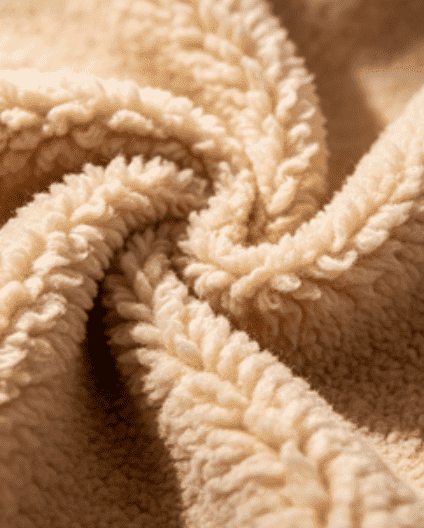
“Soft” is one of the most commonly used words in fleece sourcing.
Unfortunately, it is also one of the least precise.
Two buyers may have completely different definitions of softness.
One may want a silky surface.
Another may want a thick, fluffy pile.
A third may prefer a dry, warm touch with less slipperiness.
Hand feel depends on:
- filament fineness
- yarn structure
- knitting
- brushing
- pile length
- finishing agents
- fabric density
- washing treatment
This is why physical reference samples are important.
When a buyer approves a fleece sample, the approved material should become part of the bulk-production quality reference.
Pile Height Changes the Consumer Experience
Pile height refers to how far the raised fibers extend from the base structure.
Shorter pile tends to create:
- cleaner surface definition
- lower bulk
- easier sewing
- more controlled appearance
Longer pile tends to create:
- greater softness
- higher perceived warmth
- plush appearance
- more luxurious tactile character
But longer pile may also create more manufacturing challenges.
These can include:
- pile compression during packing
- visible direction changes
- lint
- sewing interference
- uneven trimming
- surface matting
Therefore, increasing pile height is not automatically an improvement.
The optimum pile is determined by the finished product.
Pile Direction Matters During Cutting
This is particularly important for coral fleece and other plush fabrics.
Pile has a direction.
When fabric is viewed or touched in one direction, it can appear darker or smoother. When viewed from the opposite direction, light reflection and texture may change.
If product panels are cut in inconsistent directions, the finished item can appear to contain different shades even when the entire piece was dyed in the same batch.
This is known as nap direction.
Manufacturers should therefore ensure that directional fleece pieces are consistently placed during marker planning and cutting.
Buyers working on:
- robes
- pajama sets
- cushions
- plush toys
- blankets with assembled panels
should discuss pile direction with the sewing factory before mass cutting begins.
Polar Fleece vs Coral Fleece for Blankets
Both can be used successfully.
The better choice depends on how the blanket is positioned.
Choose Polar Fleece When:
The product needs to be:
- relatively lightweight
- easy to fold
- warm without excessive bulk
- suitable for travel
- suitable for outdoor-inspired use
- relatively simple in construction
Choose Coral Fleece When:
The product needs to emphasize:
- plushness
- high tactile softness
- cozy indoor use
- visual volume
- comfort
- luxury-style hand feel
For home textile brands, coral fleece is often attractive for comfort-driven winter collections.
Polar fleece can be better for lightweight throws or multipurpose blankets.
Polar Fleece vs Coral Fleece for Pajamas
Both materials can also be used for sleepwear, but garment design matters.
Polar fleece is generally easier to consider for products that require relatively clean garment structure.
Coral fleece works particularly well for loose, warm pajamas and loungewear where softness is more important than streamlined silhouette.
For pajama development, buyers should test:
- skin feel
- garment weight
- seam thickness
- breathability
- stretch
- wash performance
- pilling
- static behavior
A fleece that feels excellent as a flat swatch may become too heavy after being constructed into a complete pajama set.
Prototype testing prevents this problem.
Polar Fleece vs Coral Fleece for Robes
Coral fleece is frequently attractive for robes because the deep pile creates a soft, enveloping hand feel.
A robe, however, uses a relatively large amount of fabric.
That makes GSM especially important.
If a very heavy coral fleece is selected, the finished robe may become unnecessarily bulky.
Polar fleece can provide a lighter alternative where warmth is required without the same level of plush volume.
Buyers should therefore test a complete robe rather than making the decision from a small fabric sample.
Which Fabric Is Better for Plush Toys?
Coral fleece can work particularly well for soft products because of its plush surface.
However, plush toy manufacturers need to think beyond hand feel.
Important considerations include:
- pile shedding
- seam strength
- cutting behavior
- fiber migration
- colorfastness
- applicable safety requirements
- surface durability
Shorter-pile fleece may be more appropriate when small details need to remain visually clear.
Long-pile fabrics can hide seams and create a very soft appearance but may reduce the definition of small facial or decorative elements.
The toy design should determine the material.
Pilling Resistance Is Critical
Pilling occurs when fibers become entangled on the fabric surface and form small balls through friction.
Fleece fabrics are exposed to repeated rubbing during:
- wearing
- sleeping
- washing
- drying
- transport
- regular household use
Poor pilling resistance can quickly make an otherwise soft fabric look worn.
This is especially relevant for:
- blankets
- pajamas
- robes
- jackets
- children’s clothing
Buyers should request anti-pilling performance appropriate to the intended product and verify the result through testing.
Visual inspection of a new sample cannot predict long-term surface performance.
Brushing Quality Affects Both Fabrics
Brushing is one of the key processes used to create the characteristic surface of fleece.
Controlled brushing can improve:
- softness
- surface uniformity
- loft
- warmth
- visual fullness
Poorly controlled brushing may cause:
- uneven pile
- exposed base structure
- excessive loose fibers
- inconsistent thickness
- surface weakness
Buyers evaluating fleece should inspect the entire sample rather than touching only one location.
Check whether the pile remains consistent:
- across the width
- along the fabric length
- near the edges
- after washing
For repeat programs, brushing consistency between batches is particularly important.
Colorfastness Matters for Dark and Bright Fleece
Coral fleece and polar fleece are frequently produced in vivid colors.
Dark navy, black, red, burgundy, green, and highly saturated fashion colors can create attractive finished products, but colorfastness should be verified.
Relevant performance may include resistance to:
- washing
- dry rubbing
- wet rubbing
- perspiration
- light
The exact testing program depends on the final product and destination market.
For textile goods entering the United States, fiber identification and labeling also need to follow applicable requirements. The U.S. Federal Trade Commission provides guidance covering textile fiber content and labeling, including requirements to identify constituent fibers in covered products.
Shrinkage and Dimensional Stability
Polyester itself is generally associated with good dimensional stability, but finished fleece still needs testing.
Knitting tension, heat setting, finishing, brushing, and washing conditions can all influence final dimensions.
Buyers should evaluate shrinkage in:
- length
- width
For cut-and-sew products, even modest dimensional changes can create problems.
Imagine pajama pants with different shrinkage characteristics between the body fabric and waistband components.
After washing, proportions may change.
The same issue can affect:
- blanket dimensions
- cushion covers
- robes
- children’s garments
Pre-production washing tests are therefore advisable.
Density Matters as Much as GSM
Buyers sometimes assume that two fleece fabrics with identical GSM will feel identical.
They often do not.
Fabric A may use a compact, dense construction.
Fabric B may rely on a looser structure with more pronounced pile.
Both may weigh 250 GSM but produce very different finished products.
Density influences:
- stability
- opacity
- warmth
- stretch
- durability
- surface support
- sewing
When comparing suppliers, buyers should evaluate physical structure in addition to the GSM number.
Check Fabric Width and Usable Width
Width directly affects manufacturing efficiency.
Suppliers may provide:
- total width
- usable width
These are not always identical.
Edges may contain areas unsuitable for final cutting.
A garment manufacturer should therefore calculate marker planning according to usable width rather than nominal roll width.
The same issue matters for large products such as blankets.
If the usable width is too narrow, a blanket design may require:
- seams
- alternative dimensions
- different cutting layouts
Width should be confirmed during sampling.
Printing on Polar Fleece and Coral Fleece
Both fabrics can support decorative printing, but pile structure changes the visual result.
A compact polar fleece surface can often maintain sharper printed details.
Deep coral fleece pile may create a softer visual appearance because fibers move and partially interrupt the image.
This does not prevent coral fleece from being printed.
It simply means artwork should be developed around the actual surface.
Suitable pattern types can include:
- floral
- geometric
- children’s motifs
- seasonal designs
- animal patterns
- abstract designs
Fine lines and tiny details should be tested carefully on deep pile.
Xize’s custom fabric services include printing, jacquard, embossing, and other processing options alongside warp- and weft-knitted fabric development.
Solid Color or Printed Fleece?
Solid-color fleece is useful when the product relies on:
- texture
- simple styling
- brand color
- coordinated collections
Printed fleece creates greater visual differentiation.
Printed materials are particularly common in:
- children’s blankets
- pajamas
- seasonal home textiles
- decorative throws
- plush products
Buyers should think about collection strategy.
One base fleece can often support multiple patterns or colorways, allowing a manufacturer or brand to build a coordinated product family around a consistent material specification.
Static Electricity Should Be Considered
Polyester fleece can develop static electricity, especially in dry environments.
This can affect comfort and can also cause the surface to attract:
- dust
- lint
- hair
The extent depends on:
- humidity
- finishing
- fiber
- garment construction
- end-use environment
Buyers developing particular consumer products may discuss antistatic finishing with the textile manufacturer where appropriate.
General references on polar fleece also note its tendency to generate static electricity.
Test the Fabric After Washing
A new fleece sample provides only part of the information buyers need.
Washing reveals how the material is likely to behave in real use.
Before approving bulk production, buyers should compare fabric before and after washing for:
- shrinkage
- pile appearance
- softness
- pilling
- color
- dimensional distortion
- edge curling
- surface matting
Ideally, testing should represent the care method that will be recommended for the finished product.
If a blanket will be marketed as machine washable, the fabric should be evaluated under realistic machine-washing conditions.
Sewing Trials Are Essential
Fleece can behave differently on the sewing line depending on pile and thickness.
A practical sample should be converted into at least a small prototype.
Potential sewing issues include:
- seam bulk
- pile trapped in seams
- feeding differences
- stretching
- skipped stitches
- edge distortion
- inconsistent visual direction
Coral fleece may require additional attention because longer pile can interfere with seam visibility and fabric handling.
Polar fleece may be easier to manage, but heavier constructions can still create bulky seams.
Production teams should confirm suitable:
- needle
- thread
- seam allowance
- stitch
- feed settings
before full manufacturing begins.
Bulk Consistency Should Be Part of Approval
For professional buyers, the best fabric is not the sample that feels impressive once.
It is the fabric that can be reproduced consistently.
Important bulk parameters include:
| Quality Point | What Buyers Should Check |
|---|---|
| Composition | Consistent fiber specification |
| GSM | Within approved tolerance |
| Width | Stable usable width |
| Shade | Consistency within and between lots |
| Pile | Uniform height and direction |
| Softness | Matches approved sample |
| Density | Stable construction |
| Pilling | Meets target performance |
| Shrinkage | Within specified tolerance |
| Printing | Consistent pattern and registration |
| Packaging | Protects pile during transport |
Xize states that its production system includes full-process testing of parameters such as softness, colorfastness, stability, and elastic recovery, while its factory specializes in all-polyester warp- and weft-knitted fleece fabrics. Buyers can review the company’s manufacturing and quality capabilities for additional background.
Avoid Approving Fleece From Photos Alone
Photos can help identify:
- color families
- patterns
- general texture
- visual style
But photos cannot reliably communicate:
- softness
- pile density
- weight
- drape
- stretch
- recovery
- dimensional stability
Lighting can also exaggerate or reduce pile depth.
For serious product development, buyers should work from physical samples and clearly documented specifications.
A Practical Buyer Checklist
Before confirming polar fleece or coral fleece, buyers can use the following checklist:
| Item | Confirm Before Production |
|---|---|
| Product application | Blanket, apparel, robe, toy, etc. |
| Composition | Fiber percentages |
| GSM | Target range |
| Width | Total and usable |
| Pile height | Matches product requirement |
| Pile direction | Controlled for cutting |
| Density | Appropriate structure |
| Hand feel | Approved reference |
| Color | Approved physical sample |
| Printing | Pattern suitable for pile |
| Pilling | Tested |
| Shrinkage | Tested after washing |
| Colorfastness | Matches market requirement |
| Sewing | Prototype completed |
| Bulk tolerance | Defined and agreed |
| Packaging | Prevents excessive compression |
This turns a subjective fleece decision into a repeatable sourcing process.
When to Choose Polar Fleece
Polar fleece is particularly suitable when the product requires a combination of:
- warmth
- relatively low bulk
- flexible apparel use
- stable construction
- easy layering
- practical handling
It is therefore a strong option for:
- jackets
- hoodies
- outdoor-inspired garments
- pajamas
- lightweight blankets
- accessories
Buyers should still adjust GSM, surface, density, and finishing according to the exact product.
When to Choose Coral Fleece
Coral fleece is particularly suitable when tactile softness and visual plushness are central product features.
It is commonly appropriate for:
- plush blankets
- robes
- warm pajamas
- children’s products
- decorative throws
- soft home textiles
- plush accessories
Its deeper pile creates a distinct comfort-oriented character that can be difficult to reproduce with shorter fleece constructions.
How Xize Supports Custom Fleece Development
Choosing the correct material becomes easier when the fabric manufacturer understands how the finished product will be used.
Xize Textile focuses on polyester warp- and weft-knitted fleece fabrics and manages an integrated process from fabric development and weaving through dyeing, finishing, and final testing. The company currently presents more than 60 fleece styles alongside warp knitting and jacquard production capabilities.
Its one-stop custom fabric solution begins by defining application, hand feel, weight, color, and process requirements before recommending an appropriate construction.
This approach is useful for polar fleece and coral fleece projects because buyers can evaluate GSM, pile, color, printing, surface treatment, and product application together instead of treating them as isolated decisions.
FAQ
What is polar fleece?
Polar fleece is a soft synthetic fleece generally made from polyester. Its surface is brushed or napped to create insulating fibers that trap air while maintaining relatively low fabric weight.
What is the main difference between polar fleece and coral fleece?
The most noticeable difference is generally the pile. Polar fleece usually has a shorter, more compact fleece surface, while coral fleece tends to have a longer, denser, more plush pile.
Is polar fleece warmer than coral fleece?
Not necessarily. Warmth depends on GSM, density, pile structure, loft, garment construction, and other factors. A heavy polar fleece can be warmer than a lightweight coral fleece, while a dense plush coral fleece may provide stronger warmth in other constructions.
Which fleece is better for blankets?
Both can work well. Polar fleece is useful for lighter, practical blankets, while coral fleece is particularly suitable when plush softness and a cozy hand feel are central product requirements.
Which fabric is better for pajamas?
Polar fleece can work well for more structured warm sleepwear, while coral fleece is especially suitable for soft and loose winter pajamas. GSM, breathability, seam bulk, and washing performance should be evaluated through a garment sample.
Does coral fleece pill?
Coral fleece can pill if yarn quality, brushing, structure, or finishing is not properly controlled. Pilling performance should therefore be evaluated before approving bulk production.
Can polar fleece be printed?
Yes. Polar fleece can support different printing methods. The final result depends on pile height, surface structure, artwork, and printing process, so buyers should approve an actual printed sample.
Is polar fleece made from polyester?
Most commercial polar fleece is made from polyester. Buyers should nevertheless confirm the fiber-content specification provided by the manufacturer and ensure finished-product labeling meets requirements in the destination market.
Conclusion
Polar fleece and coral fleece are closely related polyester fleece materials, but they serve different product priorities.
Polar fleece is generally characterized by a more compact raised surface and is particularly versatile for apparel, lightweight blankets, warm accessories, and products that need insulation without excessive bulk.
Coral fleece usually provides a deeper, more plush surface and is especially well suited to blankets, robes, pajamas, children’s textiles, and other products where softness and comfort strongly influence consumer perception.
Professional buyers should avoid choosing between the two based only on material names.
GSM, pile height, density, usable width, pilling resistance, colorfastness, shrinkage, printing compatibility, sewing behavior, and batch consistency should all be included in the evaluation process.
When these specifications are confirmed through physical sampling and realistic product testing, both polar fleece and coral fleece can provide reliable foundations for commercial textile collections.
For buyers developing blankets, apparel, loungewear, plush products, or customized home textiles, Xize’s polyester fleece fabric range and custom fabric development services provide options for matching fabric structure, surface treatment, color, printing, and finishing to the intended application.