
Table of Contents
Introduction
Jacquard fabric is often selected because of its visual depth, structured pattern, and ability to create a more distinctive textile surface than a basic solid or printed fabric. However, professional buyers should not evaluate jacquard fabric by appearance alone.
A pattern that looks attractive in a small swatch can behave very differently once it is used for blankets, cushions, upholstery-style soft furnishings, apparel, bedding, plush products, or other finished textile goods. Pattern repeat, fabric structure, yarn quality, GSM, density, dimensional stability, colorfastness, hand feel, finishing, and batch consistency can all affect whether the material performs successfully in commercial production.
This is particularly important for buyers working with customized jacquard fabric. Once a unique design, yarn combination, color scheme, or surface effect enters bulk production, correcting an unsuitable construction becomes much more difficult than identifying the issue during sample development.
For sourcing managers, wholesalers, home textile brands, apparel manufacturers, and product developers, the goal is therefore not simply to find an attractive jacquard pattern. The goal is to identify a fabric that combines design, production efficiency, durability, application suitability, and stable repeatability.
This guide explains the main characteristics buyers should check before selecting jacquard fabric for commercial textile projects.
What Is Jacquard Fabric?
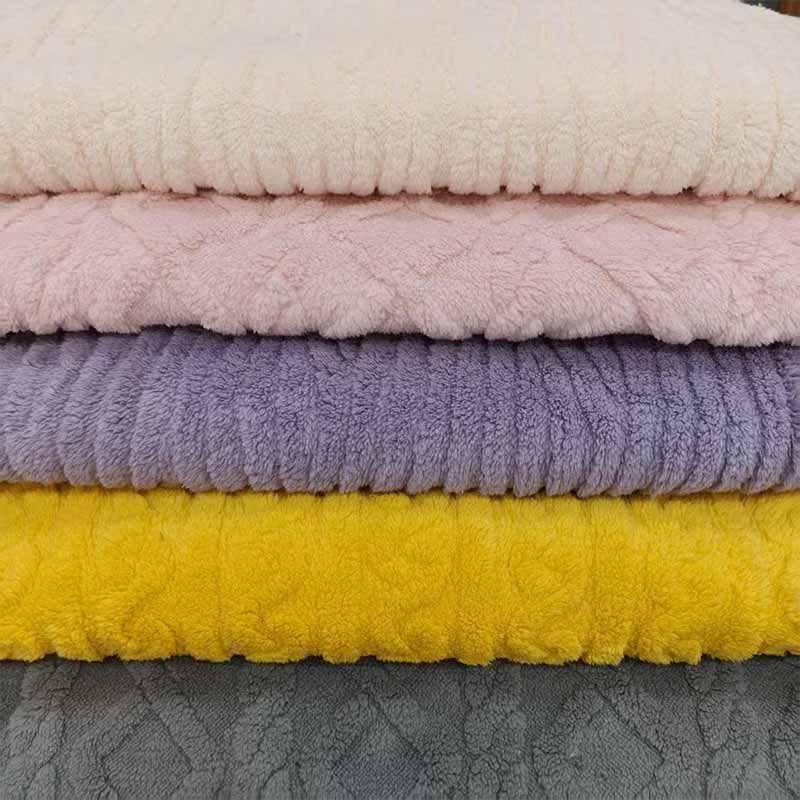
Jacquard fabric is a textile in which decorative or structural patterns are created through controlled yarn movement during the fabric-forming process rather than simply being applied as a flat print after the base fabric has been produced.
The concept originates from the Jacquard mechanism, which made it possible to control individual yarn movements and create highly detailed textile patterns. Modern computerized jacquard systems have greatly expanded the level of control available to textile manufacturers.
North Carolina State University’s Zeis Textiles Extension explains that jacquard shedding can individually control warp yarns, allowing complex weave structures and large design repeats to be produced. Buyers interested in the technical background can review the university’s explanation of jacquard shedding and weaving structures.
In commercial textile sourcing, however, the word “jacquard” can describe a broad range of constructions. Jacquard may be woven or knitted, lightweight or heavy, smooth or textured, monochrome or multicolored.
That means the term itself does not tell a buyer enough about the finished material.
A professional specification should identify not only that the fabric is jacquard but also its fiber composition, construction, weight, width, pattern repeat, finishing method, intended use, and performance requirements.
Jacquard Fabric Is Not the Same as Printed Fabric
One of the most important distinctions buyers should understand is the difference between a jacquard pattern and a printed pattern.
Printed fabric normally begins with a base cloth. The visual design is then added through a printing process.
With jacquard construction, the pattern is created as part of the fabric structure itself.
This difference influences texture, dimensional appearance, reverse-side appearance, durability, production method, pattern limitations, and development cost.
| Feature | Jacquard Fabric | Printed Fabric |
|---|---|---|
| Pattern formation | Created within fabric structure | Applied to fabric surface |
| Surface depth | Often dimensional or textured | Usually flatter |
| Pattern durability | Structure remains part of fabric | Depends on printing process |
| Design flexibility | High but construction-dependent | Very high visually |
| Pattern repeat | Important production factor | Generally easier to modify |
| Development process | Construction + pattern development | Artwork + printing development |
| Surface feel | Can vary significantly | Depends mainly on base fabric |
| Best use | Texture-led premium designs | Graphic and color-rich designs |
Neither method is universally better.
Printed fabric may be more appropriate when highly detailed graphics, photographs, multicolor artwork, or frequent pattern changes are required.
Jacquard can be preferable when buyers want texture, integrated motifs, dimensional surfaces, logos, geometric patterns, tonal designs, or a stronger sense of textile construction.
Xize supports both jacquard and printing within its custom fabric development process, which allows the most suitable technique to be selected according to the target application rather than forcing every design into the same production method.
The First Question: What Will the Fabric Be Used For?
Before evaluating pattern or color, buyers should define the final product.
A jacquard fabric designed for a cushion cover does not need exactly the same properties as one intended for pajamas, throws, blankets, decorative bedding, garments, or plush products.
Application affects almost every important specification.
For example, fabric intended for a blanket may prioritize:
- softness
- warmth
- dimensional stability
- surface durability
- low pilling
- easy care
Fabric intended for apparel may place greater emphasis on:
- drape
- flexibility
- skin comfort
- stretch
- lighter weight
- breathability
Decorative soft furnishings may prioritize:
- visual definition
- pattern repeat
- abrasion resistance
- dimensional stability
- color consistency
This is why buyers should always communicate the intended finished product before asking a factory to recommend a jacquard construction.
Check the Fiber Composition
The fiber composition influences durability, hand feel, moisture behavior, dimensional stability, care requirements, dyeing performance, and overall product positioning.
Jacquard is not itself a fiber.
It is a method of creating patterned fabric.
Therefore, jacquard fabrics can be made from materials such as:
- polyester
- cotton
- viscose
- nylon
- blended fibers
- specialty yarns
For Xize’s existing manufacturing system, polyester is particularly relevant because the company’s core production focuses on warp- and weft-knitted polyester fabrics.
Polyester jacquard can be particularly suitable for applications where buyers need stable color, relatively easy maintenance, production consistency, durability, and flexibility in finishing.
However, fiber composition should always match the finished product.
A buyer should not select polyester jacquard simply because polyester is widely available. The material needs to meet the target requirements for hand feel, drape, durability, appearance, washing, and market positioning.
GSM Should Match the Final Application
GSM, or grams per square meter, represents fabric weight per unit area.
It is one of the most important specifications in jacquard sourcing because changing the GSM can alter the entire character of a textile.
A lighter jacquard may feel:
- softer
- more flexible
- easier to drape
- more suitable for apparel
A heavier jacquard may feel:
- more structured
- more substantial
- warmer
- better suited to blankets or furnishings
However, higher GSM does not automatically mean better quality.
A well-designed lightweight fabric can outperform an unnecessarily heavy fabric when used for the correct application.
Buyers should therefore avoid specifications such as:
“Need high-quality heavy jacquard.”
Instead, define an approximate GSM range and explain the intended product.
For example:
Application: decorative throw
Target GSM: 260–320 GSM
Requirement: soft hand feel, visible textured pattern, good dimensional stability
This gives the factory much more useful information.
Pattern Repeat Is a Critical Commercial Specification
Pattern repeat describes the distance before the jacquard design begins again.
This may seem like a visual detail, but repeat size can directly affect production efficiency.
Imagine a large floral jacquard with a 70 cm repeat.
If the fabric is being used for a small 40 cm cushion panel, the motif may not fit naturally into the cutting layout. Some parts of the pattern may need to be positioned carefully, increasing waste and complicating cutting.
For large blankets, however, the same repeat might create an attractive visual effect.
Buyers should therefore request the exact repeat dimensions before confirming a design.
The important questions include:
- What is the horizontal repeat?
- What is the vertical repeat?
- Where does the pattern restart?
- Is the motif directional?
- Does the pattern need centered placement?
- How will it align with cutting dimensions?
Pattern repeat should be considered before the bulk fabric is developed, not after production begins.
Large Patterns vs Small Patterns
Large jacquard patterns can create dramatic visual impact, but they are not always the most commercially efficient.
They are generally more suitable for products with larger uninterrupted surfaces, such as:
- blankets
- bedding
- curtains
- large cushions
- throws
Smaller repeat patterns may offer greater flexibility for:
- apparel
- pillowcases
- small accessories
- plush products
- narrow product panels
Small repeats also tend to reduce the risk that one finished product will display an awkwardly cropped motif.
This is especially important for manufacturers producing multiple sizes from the same fabric.
Check Pattern Definition
A good jacquard pattern should remain recognizable and controlled.
Poor pattern definition may appear as:
- blurred edges
- uneven motifs
- distorted geometry
- inconsistent raised areas
- irregular yarn tension
- incomplete pattern formation
Pattern clarity depends on more than the digital design file.
It can be influenced by:
- yarn thickness
- yarn tension
- machine setup
- knitting or weaving density
- structure
- finishing
- brushing
- heat setting
A complex pattern may therefore require several rounds of sampling before it produces the intended result.
This is one reason sample approval is particularly important for custom jacquard development.
Yarn Selection Influences Texture and Appearance
Jacquard designs are created through yarn interaction, which means yarn selection can dramatically change how the same pattern appears.
Different yarns can alter:
- surface brightness
- softness
- contrast
- texture
- volume
- pattern definition
- durability
For example, a glossy yarn may reflect more light and make part of the design appear brighter.
A matte yarn can produce a more understated effect.
Thicker yarns can create stronger relief, while finer yarns may support more detailed patterns.
In some constructions, designers intentionally combine yarn characteristics to create contrast without using dramatically different colors.
This is why buyers developing a premium jacquard fabric should evaluate both pattern and yarn.
Do Not Judge Jacquard Fabric Only From Photos

Photos are useful for initial selection but inadequate for final approval.
Jacquard fabric interacts with light.
Raised and recessed sections can appear completely different depending on viewing angle, lighting conditions, camera exposure, and screen settings.
A tonal pattern may appear almost invisible in one photograph and highly textured in another.
Physical samples allow buyers to evaluate:
- hand feel
- weight
- dimensional texture
- surface depth
- reverse-side appearance
- drape
- color
- stretch
- pattern scale
Whenever possible, physical samples should be reviewed under the same type of lighting expected in the final retail or usage environment.
Surface Texture Can Change Perceived Quality
A key advantage of jacquard fabric is the ability to create visual effects through actual textile structure.
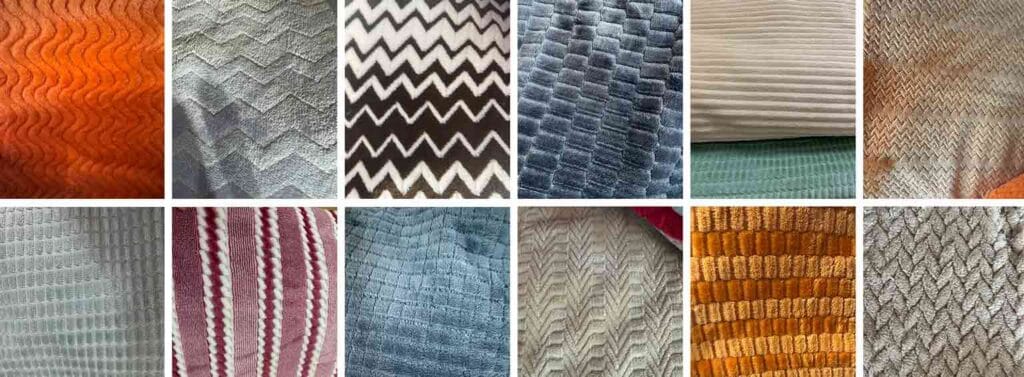
The surface may include:
- raised areas
- recessed areas
- ribbed sections
- geometric relief
- floral texture
- tonal contrasts
- plush sections
- smooth sections
These details can make relatively simple colors appear more sophisticated.
A cream-colored jacquard, for example, can remain visually interesting even without multiple colors because light and shadow reveal the pattern.
This makes tonal jacquard particularly useful for buyers who want differentiation without relying on highly seasonal color combinations.
Check the Reverse Side
Professional buyers should always inspect both sides of jacquard fabric.
The reverse side can reveal important information about construction quality.
Look for:
- excessive loose yarns
- irregular floats
- unstable pattern areas
- snagging risk
- inconsistent tension
- untidy yarn transitions
Some jacquard constructions are intentionally different on the back, so the reverse side does not need to look identical to the face.
However, it should still be suitable for manufacturing and the final application.
If the reverse side will remain visible in the finished product, this requirement must be clearly specified during development.
Dimensional Stability Matters in Bulk Production
Jacquard structures can contain different densities within different areas of the pattern.
One section may be relatively compact while another contains more open or flexible loops.
If the fabric is not properly stabilized, these structural differences may contribute to distortion during cutting, sewing, finishing, or washing.
Buyers should therefore evaluate:
- width stability
- length stability
- skew
- bow
- shrinkage
- edge behavior
Dimensional stability is especially important when jacquard fabric is used for repeated geometric motifs.
Even small distortion can become visually obvious when straight lines or symmetrical patterns are involved.
Colorfastness Should Be Tested
An attractive jacquard design has limited value if the color cannot remain stable during use.
Depending on the product, buyers may need to evaluate colorfastness to:
- washing
- rubbing
- perspiration
- light
- water
Dark colors and high-contrast patterns may require particular attention because minor transfer can become more visible.
The testing method should match the final product and destination market.
A blanket may require a different performance profile from intimate apparel.
Similarly, a decorative product used indoors may face different light exposure than apparel or outdoor textiles.
Xize states that its production and quality-control process checks parameters including fabric weight, colorfastness, density, and manufacturing consistency as part of its broader custom textile solution system.
Pilling Resistance Matters for Fleece-Based Jacquard
When jacquard structures are combined with brushed, plush, or fleece-like surfaces, pilling becomes an important consideration.
Pilling occurs when loose fibers form small balls on the fabric surface due to friction.
This can affect:
- blankets
- pajamas
- plush products
- throws
- cushions
- loungewear
The risk is influenced by fiber type, yarn structure, brushing intensity, finishing, density, and surface exposure.
Buyers developing jacquard fleece should therefore request a representative sample and evaluate how the fabric behaves after rubbing and washing.
A visually impressive new sample may not accurately represent how the fabric will look after repeated use.
Brushing and Finishing Can Alter the Jacquard Effect
Post-processing can transform a jacquard fabric.
Common processes may include:
- brushing
- dyeing
- printing
- embossing
- finishing
- heat setting
Brushing can make a surface softer but may also reduce the visual sharpness of very fine patterns.
Heat setting can improve dimensional stability but must be controlled according to fiber composition and construction.
Special finishing may change:
- hand feel
- sheen
- softness
- drape
- thickness
- pattern definition
For this reason, buyers should approve the fabric after all planned finishing processes have been completed.
Approving unfinished greige or semi-finished material is not enough when the final textile will undergo substantial surface treatment.
Jacquard Fabric vs Embossed Fabric
Jacquard and embossing can both create textured surfaces, but they use different approaches.
Jacquard patterns originate from the fabric structure.
Embossing creates surface relief through pressure, heat, or specialized finishing after the fabric has been formed.
| Factor | Jacquard | Embossed Fabric |
|---|---|---|
| Pattern source | Fabric construction | Surface finishing |
| Texture | Structural | Applied |
| Design complexity | High | High |
| Development | Machine/program structure | Mold/roller/process |
| Pattern durability | Construction-dependent | Finish-dependent |
| Visual effect | Integrated | Surface-relief focused |
For some products, embossing may offer a simpler way to create a textured effect.
For others, jacquard creates a deeper and more integrated appearance.
Xize’s existing manufacturing capabilities include both jacquard production and embossing, allowing fabric development to be selected according to the intended visual and functional result rather than relying on one process for every project.
Jacquard vs Dobby Fabric
Jacquard and dobby are sometimes confused because both can create structural patterns.
Dobby generally produces smaller and more repetitive geometric patterns.
Jacquard systems provide more individual yarn control and are capable of creating significantly more complex motifs.
This distinction is also explained by North Carolina State University’s textile weaving resources, where dobby and jacquard shedding are described as separate systems with different levels of control.
For buyers, the practical decision often comes down to pattern complexity.
Simple dots, checks, stripes, or small geometric textures may not require full jacquard complexity.
Large florals, logos, detailed artwork, intricate geometrics, or variable structures may benefit more from jacquard technology.
Check Fabric Width Before Finalizing the Pattern
Fabric width is frequently overlooked during design development.
However, pattern size should be considered together with usable width.
Imagine a fabric with a 160 cm usable width and a pattern repeat that does not divide naturally across that width.
The design may leave incomplete motifs along one or both edges.
This may not matter for some products, but it can create unnecessary waste when manufacturers need centered or symmetrical panels.
Before finalizing a pattern, buyers should confirm:
- total width
- usable width
- repeat width
- edge allowance
- cutting direction
This becomes especially important for bedding, curtains, large blankets, and decorative panels.
Evaluate Cutting Efficiency
Beautiful fabric can still become an inefficient manufacturing material.
Jacquard patterns may require directional cutting.
This means garment or product pieces cannot always be rotated freely during marker planning.
Directional patterns can increase consumption because all panels need to face the same orientation.
Large repeats can also increase matching requirements.
For example, two cushion panels may need to display the same motif position.
This increases cutting complexity and may increase fabric usage.
Commercial buyers should therefore evaluate fabric yield during the sample stage.
Do not wait until full production to discover that a design creates excessive cutting waste.
Sewing Performance Should Be Tested
Jacquard fabric should ideally be tested through the real manufacturing process.
A sewing trial can reveal problems that are impossible to identify from a swatch.
Potential issues include:
- seam puckering
- stretching
- yarn snagging
- pattern misalignment
- fabric feeding differences
- fraying
- excessive bulk
- seam visibility
Knitted jacquard may behave differently from woven jacquard.
A plush jacquard may require different handling from a smooth material.
Testing a prototype helps buyers and factories determine appropriate needles, thread, seam type, cutting direction, and handling methods.
Bulk Consistency Is More Important Than One Perfect Sample
A highly attractive sample is useful, but commercial production depends on repeatability.
For jacquard projects, buyers should confirm tolerances for:
- GSM
- width
- pattern repeat
- pattern definition
- shade
- hand feel
- surface height
- stretch
- shrinkage
Pattern-related consistency is especially important.
Imagine producing thousands of cushion covers using one jacquard design.
If later production batches show noticeable differences in pattern definition or density, finished products may no longer look like the same collection.
This makes process control and machine consistency particularly important for long-term programs.
Xize states that it currently operates more than 40 jacquard knitting machine production lines as part of its wider polyester warp- and weft-knitted fabric manufacturing system. More information on its production structure is available on the company’s About Xize Textile page.
Create an Approved Master Sample
For customized jacquard fabric, an approved reference sample is extremely useful.
This sample should represent the accepted:
- pattern
- color
- GSM
- texture
- width
- softness
- surface appearance
- finishing
Both buyer and manufacturer can refer to the same benchmark during bulk production.
Written specifications remain important, but hand feel and visual depth can be difficult to communicate through numbers alone.
A master sample creates a physical reference for comparison.
For long-term repeat programs, buyers may also maintain samples from each approved production batch.
How to Evaluate a Jacquard Fabric Sample
A practical evaluation should follow a consistent process.
Step 1: Check the Specification
Confirm:
- fiber composition
- GSM
- width
- construction
- pattern repeat
- finish
Compare the actual sample with the original development brief.
Step 2: Inspect Pattern Definition
Lay the fabric flat.
Look for:
- consistent edges
- symmetrical motifs
- even pattern scale
- missing yarns
- distortion
Step 3: Check Under Different Lighting
Jacquard texture interacts strongly with light.
Check the sample under daylight and artificial lighting.
Step 4: Measure GSM
Measure multiple areas if possible.
Different points should remain reasonably consistent.
Step 5: Evaluate Hand Feel
Fold, compress, rub, and drape the fabric.
Consider whether it matches the intended consumer experience.
Step 6: Test Stretch and Recovery
For knitted jacquard, evaluate dimensional response in both length and width.
Step 7: Wash the Sample
Use a wash method that represents expected consumer care.
Then evaluate:
- shrinkage
- pattern distortion
- color change
- pilling
- hand feel
Step 8: Make a Prototype
The most reliable evaluation occurs when the material is turned into the intended product.
Common Jacquard Fabric Sourcing Mistakes
Selecting a Pattern Before Selecting the Construction
A buyer may choose a pattern based on a digital image and only later decide the fabric type.
This can create problems because some motifs do not translate effectively into every structure.
Pattern and construction should be developed together.
Ignoring Pattern Repeat
Large repeat sizes can increase waste and complicate cutting.
Always request repeat dimensions.
Approving Only the Front Side
The reverse side may influence sewing, comfort, snagging, and product appearance.
Inspect both sides.
Comparing Suppliers Only by Unit Price
Two fabrics described as “polyester jacquard” may differ significantly in GSM, width, density, yarn, finishing, and pattern complexity.
Specifications must be aligned before commercial comparisons are meaningful.
Skipping Wash Testing
A fabric may appear perfect before washing but change after laundering.
Always evaluate shrinkage, surface condition, color, and dimensional stability.
Selecting Overly Complex Patterns
More complex does not automatically mean more premium.
Some of the most commercially successful designs use restrained texture and simple tonal patterns.
The pattern should support the final product rather than overwhelm it.
How to Write a Better Jacquard Fabric RFQ
A professional RFQ should contain enough information for a manufacturer to recommend an appropriate construction.
Instead of writing:
Need jacquard fabric. Send price.
Provide:
- intended application
- preferred composition
- target GSM
- target width
- pattern reference
- repeat size if known
- target color
- surface texture
- stretch requirement
- finishing requirements
- testing requirements
- expected quantity
- destination market
- sampling requirement
For example:
Product: polyester throw blanket
Fabric: knitted jacquard
Composition: polyester
Target GSM: 280–320
Width: minimum 180 cm usable
Pattern: tonal geometric design
Repeat: medium repeat preferred
Hand feel: soft and brushed
Requirement: good dimensional stability and low pilling
Market: Europe
Request: custom sample before bulk production
This type of specification gives the manufacturer a much stronger foundation for development.
When Should Buyers Choose Custom Jacquard Fabric?
Custom jacquard fabric can be particularly useful when a buyer wants to differentiate products through the textile itself.
Potential customization includes:
- exclusive motifs
- brand-inspired patterns
- logo integration
- custom repeat sizes
- tonal textures
- yarn combinations
- colors
- GSM
- finishing
Custom development is especially valuable for brands that want their products to remain visually recognizable even without large printed logos.
However, customization requires more development discipline.
Pattern artwork, repeat scale, construction, yarn, color, sample approval, and testing should all be confirmed before bulk production.
Xize’s one-stop fabric customization service includes requirement communication, fabric recommendation, sample development, production, and quality control for processes including jacquard, printing, embossing, and other surface treatments.
Choosing Between Jacquard, Printing, and Embossing
Buyers should choose the process based on the intended commercial result.
Use jacquard when you need:
- structural pattern
- textile depth
- integrated motifs
- premium texture
- tonal dimensional effects
Use printing when you need:
- highly detailed graphics
- many colors
- fast design changes
- photographic effects
Use embossing when you need:
- surface relief
- simple dimensional patterns
- texture added to an existing base fabric
In some cases, processes can also be combined.
For example, a jacquard structure may receive additional finishing to create a more distinctive surface.
The important point is that decoration should not be selected independently of fabric performance.
Why Jacquard Fabric Works Well for Home Textiles
Home textile products provide a particularly strong application for jacquard because many products offer enough visible surface area for patterns to be appreciated.
Potential uses include:
- blankets
- throws
- cushions
- bedding
- decorative covers
- soft furnishings
Tonal jacquard can create subtle sophistication without making the product difficult to coordinate with interior color schemes.
Larger patterns can create statement products.
Smaller repeats can support more versatile ranges.
For buyers developing coordinated collections, one pattern can also be adapted into several colorways to create visual consistency across a range.
Why Knitted Jacquard Can Be Useful for Apparel
Knitted jacquard can combine visual texture with flexibility.
Depending on the structure, it can suit:
- loungewear
- outerwear
- casual apparel
- children’s garments
- warm clothing
Unlike rigid decorative fabrics, knitted jacquard can be engineered to deliver softness and movement.
However, stretch, recovery, dimensional stability, and seam behavior should be tested carefully.
The fabric should be selected according to actual garment requirements rather than its appearance alone.
Quality Checklist for Jacquard Fabric Buyers
Before approving a commercial jacquard fabric, buyers can use the following checklist:
| Check | What to Confirm |
|---|---|
| Composition | Matches specification |
| GSM | Within approved tolerance |
| Width | Meets usable-width requirement |
| Pattern | Correct design and scale |
| Repeat | Suitable for product cutting |
| Pattern definition | Clear and consistent |
| Color | Matches approved reference |
| Hand feel | Suitable for target product |
| Surface | No unwanted defects |
| Reverse side | Acceptable for manufacturing |
| Stretch | Appropriate if knitted |
| Recovery | Sufficient for application |
| Shrinkage | Within target range |
| Colorfastness | Appropriate for intended use |
| Pilling | Suitable for repeated friction |
| Sewing | No major processing problems |
| Batch consistency | Repeatable across production |
A checklist is much more reliable than evaluating fabric with statements such as “looks good” or “feels soft.”
FAQ
What is jacquard fabric?
Jacquard fabric is a patterned textile in which the design is created through controlled yarn movement during fabric construction instead of being added only as a surface print.
Is jacquard fabric woven or knitted?
It can be either. Although jacquard is historically strongly associated with woven textiles, modern jacquard technology is also widely used in knitted fabric production.
Is jacquard fabric better than printed fabric?
Neither is universally better. Jacquard is useful when structural texture and integrated patterns are desired, while printing is often more suitable for detailed graphics and complex color artwork.
What should buyers check when sourcing jacquard fabric?
Important factors include composition, GSM, width, pattern repeat, pattern definition, yarn, hand feel, finishing, colorfastness, dimensional stability, pilling, cutting efficiency, and bulk consistency.
Is polyester jacquard fabric durable?
Polyester can provide good dimensional stability and durability, but actual performance depends on yarn quality, fabric density, construction, finishing, and intended use.
Why is pattern repeat important?
Repeat size affects how the design appears on the finished product and can influence cutting efficiency and material waste.
Can jacquard fabric be customized?
Yes. Depending on manufacturing capability, buyers may customize pattern, repeat, yarn, color, GSM, width, texture, and finishing.
What products can use jacquard fabric?
Applications can include blankets, bedding, cushions, throws, apparel, decorative textiles, soft furnishings, and other products where surface design and textile texture are important.
Conclusion
Jacquard fabric should be evaluated as both a design material and a production material.
The pattern may attract initial attention, but commercial success depends on much more than appearance. Composition, GSM, pattern repeat, yarn selection, density, hand feel, dimensional stability, colorfastness, pilling resistance, finishing, cutting efficiency, sewing behavior, and batch consistency all contribute to the final result.
For professional buyers, the most effective approach is to start with the finished product and work backward.
Define the application, required performance, weight, texture, pattern scale, color, finishing, and testing requirements before developing the fabric. Then evaluate physical samples under realistic production and use conditions.
When these factors are controlled early, custom jacquard fabric can become more than decorative material. It can become a distinctive component of a textile product’s identity while still supporting efficient and repeatable commercial production.
For brands, manufacturers, wholesalers, and product developers looking for customized polyester jacquard solutions, Xize provides development support from fabric recommendation and pattern sampling through production and quality control. Buyers can explore Xize’s custom fabric solutions to develop jacquard fabrics around specific application, texture, weight, color, and finishing requirements.