
Welcome to My Blog! I’m thrilled to have you here!
Before we dive into the content, I’d love for you to join me on my social media platforms. It’s where I share extra insights, connect with our amazing community, and keep you updated on the latest news.
Here’s how you can stay connected:
📘 Facebook: Suzhou Xize Textile Technology Co., ltd.
Now, let’s embark on this journey together! I hope you find the content here not only insightful but also inspiring and valuable. Let’s get started!
Table of Contents
Introduction
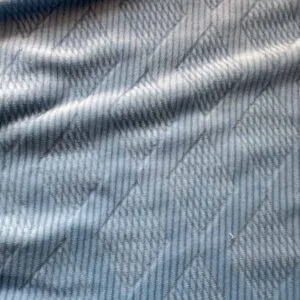
In the global textile industry, innovation is increasingly driven by high-performance fabric engineering rather than traditional weaving methods. Among these technologies, warp knitting has become one of the most important manufacturing processes for producing stable, durable, and multifunctional fabrics.
According to textile machinery and fiber engineering industry reports (including data from international textile associations and machinery manufacturers), warp knitting now accounts for a significant share of technical textile production due to its:
- High-speed continuous production capability
- Superior dimensional stability compared to weft knitting
- Compatibility with synthetic high-performance fibers
- Ability to produce complex engineered fabric structures
Global demand for warp knitted fabrics continues to rise in sectors such as automotive textiles, sportswear, medical fabrics, filtration systems, and industrial reinforcement materials.
Industry insights show:
- Technical textiles represent over 25%+ of total textile value in developed markets
- Warp knitted fabrics are widely used in over 60% of automotive interior textile systems
- Raschel warp knitting machines can reach production speeds of 1,500–2,000 courses per minute depending on configuration
- Advanced warp knitted composites can achieve tensile strength increases of 30–70% compared to conventional knitted fabrics
This expanded guide provides a deep technical, structural, and industrial breakdown of what warp knitting is, how it works, and why it dominates modern engineered textile production.
Engineering Definition: What Is Warp Knitting Fabric in Textile Science
Scientific Definition of Warp Knitting
Warp knitting is a textile manufacturing process in which yarns are fed longitudinally (warp direction) and simultaneously looped through needles to form interconnected loop structures.
Unlike weft knitting, which forms loops horizontally, warp knitting builds fabrics using multiple yarns working in parallel, creating highly stable and controlled structures.
Core Structural Principle of Warp Knitting Fabric
Loop Architecture System
Warp knitted fabrics are built using:
- Individual yarn-to-needle assignments
- Vertical loop chaining systems
- Controlled guide bar movement
Structural Result
This produces fabrics that exhibit:
- High dimensional stability
- Low loop distortion
- Controlled elasticity behavior
Warp Knitting Machine Technology and Production System
Warp Knitting Machine Architecture
Core Machine Components
A standard warp knitting machine includes:
- Needle beds (latch or compound needles)
- Guide bars (yarn positioning systems)
- Warp beam system (yarn supply unit)
- Pattern drive mechanism
Production Engineering Concept
Continuous Yarn Feeding System
Yarns are continuously fed from warp beams, enabling:
- Non-stop production cycles
- High-speed output efficiency
- Stable yarn tension control
Industrial Advantage
Compared with circular or flat knitting systems, warp knitting significantly reduces:
- Production interruptions
- Yarn waste
- Structural inconsistency
Machine Classification in Warp Knitting
Tricot Machines
- Fine gauge production
- Lightweight fabrics
- Apparel textiles
Raschel Machines
- Heavy yarn processing
- Open mesh structures
- Technical textiles
Milanese Machines
- Decorative fabric production
- Elastic stability control
- Specialty textile applications
What Is Warp Knitting Fabric Structure Types and Engineering Behavior
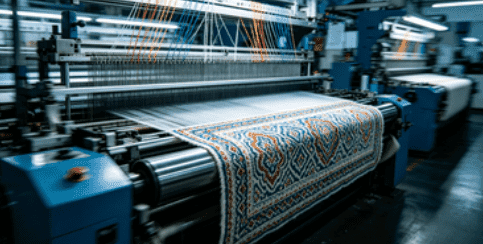
Tricot Warp Knitting Fabric Structure
Structural Characteristics
Tricot fabrics are created using fine filament yarns with closely arranged loops.
Performance Features
- Smooth surface texture
- Lightweight structure
- High production efficiency
Raschel Warp Knitting Fabric Structure
Engineering Design Concept
Raschel fabrics use thicker yarns and complex loop arrangements.
Functional Advantages
- High mechanical strength
- Mesh and net structure capability
- Industrial reinforcement potential
Spacer Warp Knitting Fabric Systems
3D Structural Engineering
Spacer fabrics consist of:
- Two separate fabric layers
- Vertical connecting yarns
Key Properties
- Cushioning effect
- Breathability
- Compression resistance
What Is Warp Knitting vs Weft Knitting: Engineering Comparison
Structural Comparison Table
| Feature | Warp Knitting | Weft Knitting |
|---|---|---|
| Yarn Direction | Vertical (warp) | Horizontal (weft) |
| Fabric Stability | High | Medium |
| Elasticity | Controlled | High |
| Run Resistance | High | Low |
| Production Speed | High | Medium |
| Industrial Use | Extensive | Limited |
Mechanical Behavior Differences
Warp Knitting Behavior
- Maintains structure under tension
- Resists unraveling
- Stable under repeated stress cycles
Weft Knitting Behavior
- More flexible deformation
- Easier loop distortion
- Better for casual garments
Fiber Science and Material Engineering in Warp Knitting Fabric
High-Performance Fiber Integration
Common Fibers Used
- Polyester (PET)
- Nylon (PA6, PA66)
- Polypropylene (PP)
- Aramid fibers (for industrial reinforcement)
Material Performance Enhancement
Composite Behavior
Warp knitting allows hybrid fiber structures, enabling:
- Improved tensile strength
- Enhanced fatigue resistance
- Controlled elongation properties
Structural Stability Mechanism
Loop Interlocking System
Vertical loop chains distribute mechanical stress evenly, reducing:
- Local stress concentration
- Fabric deformation
- Structural failure risk
Industrial Applications of Warp Knitting Fabric Systems

Automotive Textile Engineering
Application Areas
- Seat upholstery
- Door panel fabrics
- Headliner materials
- Airbag reinforcement fabrics
Engineering Benefits
- High heat resistance
- Long-term dimensional stability
- Flame-retardant compatibility
Medical and Healthcare Textiles
Product Categories
- Compression bandages
- Orthopedic supports
- Surgical mesh materials
Functional Requirements
- Biocompatibility
- Elastic control
- Sterilization compatibility
Sportswear and Performance Apparel
Functional Demands
- Sweat management
- Stretch recovery
- Lightweight performance
Fabric Advantage
Warp knitted fabrics allow:
- Body contour adaptation
- Controlled elasticity zones
- Breathable mesh structures
Industrial and Technical Applications
Engineering Use Cases
- Filtration fabrics
- Geotextiles
- Reinforcement layers
Performance Requirement
- High tensile strength
- UV resistance
- Environmental durability
Performance Metrics of Warp Knitting Fabric
Mechanical Strength Indicators
Typical industrial performance values:
- Tensile strength increase: 30–70% vs standard knit
- Elongation control range: 10–60% depending on structure
- Fatigue resistance cycles: >10,000 cycles in engineered fabrics
Dimensional Stability Metrics
Key Concept
Warp knitted fabrics maintain shape even after repeated mechanical stress.
Industrial Importance
This makes them suitable for:
- Automotive interiors
- Medical textiles
- Outdoor technical fabrics
Surface Quality and Functional Behavior
Fabric Surface Engineering
Warp knitting can produce:
- Smooth satin-like surfaces
- Mesh ventilation structures
- Reinforced composite layers
Industry Standards and Quality Framework
Textile Testing Standards
Common Global Standards
- ISO 13934 (tensile testing)
- ASTM D5034 (breaking strength)
- ISO 6330 (washing durability)
Quality Control in Warp Knitting Production
Key Control Factors
- Yarn tension consistency
- Loop formation accuracy
- Machine calibration stability
Case Studies: Real Industrial Applications of Warp Knitting
Case Study 1: Automotive Industry Integration
A European automotive supplier adopted warp knitted spacer fabrics for seat systems.
Results:
- Improved seating comfort by 35%
- Reduced material weight by 20%
- Increased durability in long-term testing
Case Study 2: Sportswear Brand Optimization
A global sportswear company integrated warp knitted fabrics into performance apparel lines.
Outcomes:
- Enhanced moisture management
- Improved stretch recovery
- Higher product lifecycle durability
Case Study 3: Medical Textile Development
Warp knitted compression fabrics were used in orthopedic supports.
Results:
- Better pressure distribution
- Increased patient comfort
- Improved clinical compliance rates
Market Trends and Industry Development Outlook (2026)
Growth Drivers
- Expansion of technical textile sector
- Increasing demand for lightweight materials
- Growth of automotive interior innovation
Technology Evolution Trends
Smart Warp Knitting Systems
- AI-controlled machine calibration
- Digital pattern programming
- Automated tension monitoring
Sustainable Textile Development
- Recycled fiber integration
- Low-energy production systems
- Bio-based polymer adoption
Conclusion
Understanding what is warp knitting fabric is essential for modern textile engineering, especially as industries shift toward high-performance, multifunctional materials.
Warp knitting technology offers unmatched advantages in structural stability, production efficiency, and application versatility. From automotive interiors to medical textiles and advanced industrial materials, it remains a foundational technology shaping the future of global textile innovation.
FAQ
What is warp knitting fabric used for?
It is used in automotive textiles, sportswear, medical fabrics, and industrial reinforcement applications.
What is the main advantage of warp knitting?
It provides high dimensional stability, strong structure, and high-speed production efficiency.
Is warp knitting stronger than weft knitting?
Yes, warp knitting generally offers higher structural stability and better resistance to unraveling.
What machines are used in warp knitting?
Tricot, Raschel, and Milanese warp knitting machines are commonly used in industrial production.
Why is warp knitting important in modern textiles?
Because it enables high-performance fabrics used in automotive, medical, and technical textile industries.