
Welcome to My Blog! I’m thrilled to have you here!
Before we dive into the content, I’d love for you to join me on my social media platforms. It’s where I share extra insights, connect with our amazing community, and keep you updated on the latest news.
Here’s how you can stay connected:
📘 Facebook: Suzhou Xize Textile Technology Co., ltd.
Now, let’s embark on this journey together! I hope you find the content here not only insightful but also inspiring and valuable. Let’s get started!
Table of Contents
Introduction
From the shimmering silks that once graced imperial courts to the intricate handwoven tapestries that adorned sacred temples, Chinese Textile Art represents one of the most profound expressions of cultural identity, artistic ingenuity, and historical continuity in human history. For over five millennia, textiles in China have evolved from simple functional weaves to highly sophisticated artistic mediums that embody social status, religious symbolism, and technical excellence. Early silk fragments discovered at the Qianshanyang archaeological site in Zhejiang Province, dating back over 4,200 years, provide some of the earliest evidence of silk production, confirming China’s status as the birthplace of silk weaving civilization.
The significance of Chinese textile art goes far beyond aesthetics. These artifacts carry complex cultural narratives—connecting spirituality, politics, science, trade, and technology. As a testament to its cultural value, the China National Silk Museum in Hangzhou attracts nearly 1.7 million visitors each year, serving as the world’s largest dedicated textile museum and a global hub for preserving and studying Chinese textile heritage.
Today, rare pieces of Chinese textile art are prized by collectors, researchers, and museums worldwide. They are valued not only for their technological mastery and aesthetic beauty but also for their deep connections to dynastic history, religion, and cultural exchange along the Silk Road. This comprehensive article explores six of the most remarkable rare Chinese textile art collections, analyzing their origins, techniques, cultural context, and significance for both history and contemporary collectors.
Collection One: Ming Dynasty Silk Embroidery

Historical Background and Cultural Significance
During the Ming dynasty (1368–1644), silk embroidery reached unprecedented levels of sophistication and artistic detail. Skilled artisans developed vibrant palettes using natural dyes derived from plants, minerals, and insects to produce colors that have endured centuries. This period saw a remarkable integration of artistic motifs into daily and ceremonial garments, transforming mere fabric into cultural symbols. Unlike basic woven cloth, Ming dynasty silk embroidery often depicted elaborate imagery such as dragons—symbolic of imperial power—and phoenixes—symbols of prosperity and harmony.
The process of silk embroidery involved not only technical skill but also metaphorical storytelling. Floral patterns were often symbolic: peonies stood for wealth and honor, chrysanthemums for longevity, and lotus flowers for purity. Historical records indicate that some embroidered garments were so intricate that they took many months to complete, with dozens of artisans collaborating in workshop environments that operated under strict quality standards.
Techniques and Materials
The hallmark of Ming embroidery was its micro-stitch precision, often achieved using satin stitch and seed stitch, enabling smooth color transitions and delicate shading that mimicked brushwork in traditional Chinese painting. These techniques allowed artisans to create highly realistic images, ranging from landscapes to mythological scenes. Modern textile historians note that the combination of embroidery and painting techniques in these textiles reflects a period when artistic disciplines increasingly intersected.
Why It’s Rare
Authentic Ming dynasty silk embroidery textiles are extremely rare due to the fragility of silk, environmental degradation over centuries, and the limited number of pieces that were preserved. Those that survive today are often housed in major museums or private collections with extensive conservation efforts.
Collector Insights
According to textile specialist Dr. Zhao Feng, director of the China National Silk Museum, Ming dynasty textiles are among the most challenging to preserve due to their sensitivity to light, temperature, and humidity. Proper conservation techniques include UV-filtered displays and climate-controlled storage to prevent further deterioration.
Collection Two: Qing Dynasty Brocade

Imperial Weaving Techniques and Materials
Brocade textiles from the Qing dynasty (1644–1912) represent some of the most luxurious examples of Chinese textile art, combining silk with metallic threads woven together to form resplendent motifs. These pieces were traditionally reserved for imperial use—worn as robes by emperors, empresses, and high-ranking officials. The complexity of these textiles stemmed from supplementary weft techniques that allowed artisans to incorporate gold or silver threads directly into the weave.
The imagery woven into Qing brocade often symbolized power, prosperity, and cosmic harmony. Imperial dragons, clouds, and lotus flowers are recurring motifs in these works, each laden with auspicious meanings. These textiles not only served as garments but also communicated political authority and spiritual symbolism.
Artistic and Technical Mastery
The production of high-quality Qing brocade required exceptional skill and meticulous planning. Some brocades used up to 130 different silk threads to create subtle gradations and three-dimensional patterns. Records from historical weaving guilds note that a single piece of brocade could take weeks or even months to complete due to the intricacy and precision of the design process.
Preservation and Rarity
Most Qing brocades that survive are in museums or private collections. Their rarity is magnified by the fact that many were produced exclusively for the imperial household and not for general circulation. The limited number of master weavers with complete knowledge of these traditional techniques—only a few dozen remain today—makes authentic Qing brocade textiles rare and highly sought after.
Collection Three: Tibetan Silk Panels
Cultural Context and Artistic Symbolism
Tibetan silk panels represent a distinct branch of Chinese textile art influenced by Buddhist iconography and monastic traditions. These textiles were typically used in religious spaces—temples, monasteries, or on ceremonial occasions—and often depict sacred symbols like lotus flowers, mandalas, and deities. Tibetan textiles incorporate both native weaving traditions and Chinese techniques, resulting in a unique fusion of cultural aesthetics.
The use of silk in Tibetan practices was both symbolic and functional. Silk’s radiant surface was believed to reflect spiritual illumination, reinforcing the sacred nature of religious spaces and ritual garments.
Why They Are Rare
Tibetan silk panels are rare due to their specialized function and limited production. Many were created for specific religious ceremonies and were preserved by monastic communities rather than in secular collections. Over time, climatic conditions and the changing roles of monasteries have made surviving examples particularly valuable to historians and collectors.
Appreciation and Conservation
Today, Tibetan silk panels are considered treasures of religious and cultural significance. Conservation efforts often involve careful stabilization of fragile fibers and detailed documentation of weaving methods and motifs, which can vary significantly across regions and religious lineages.
Collection Four: Song Dynasty Tapestry Weaving (Kesi)
A Tapestry Tradition with Global Reach
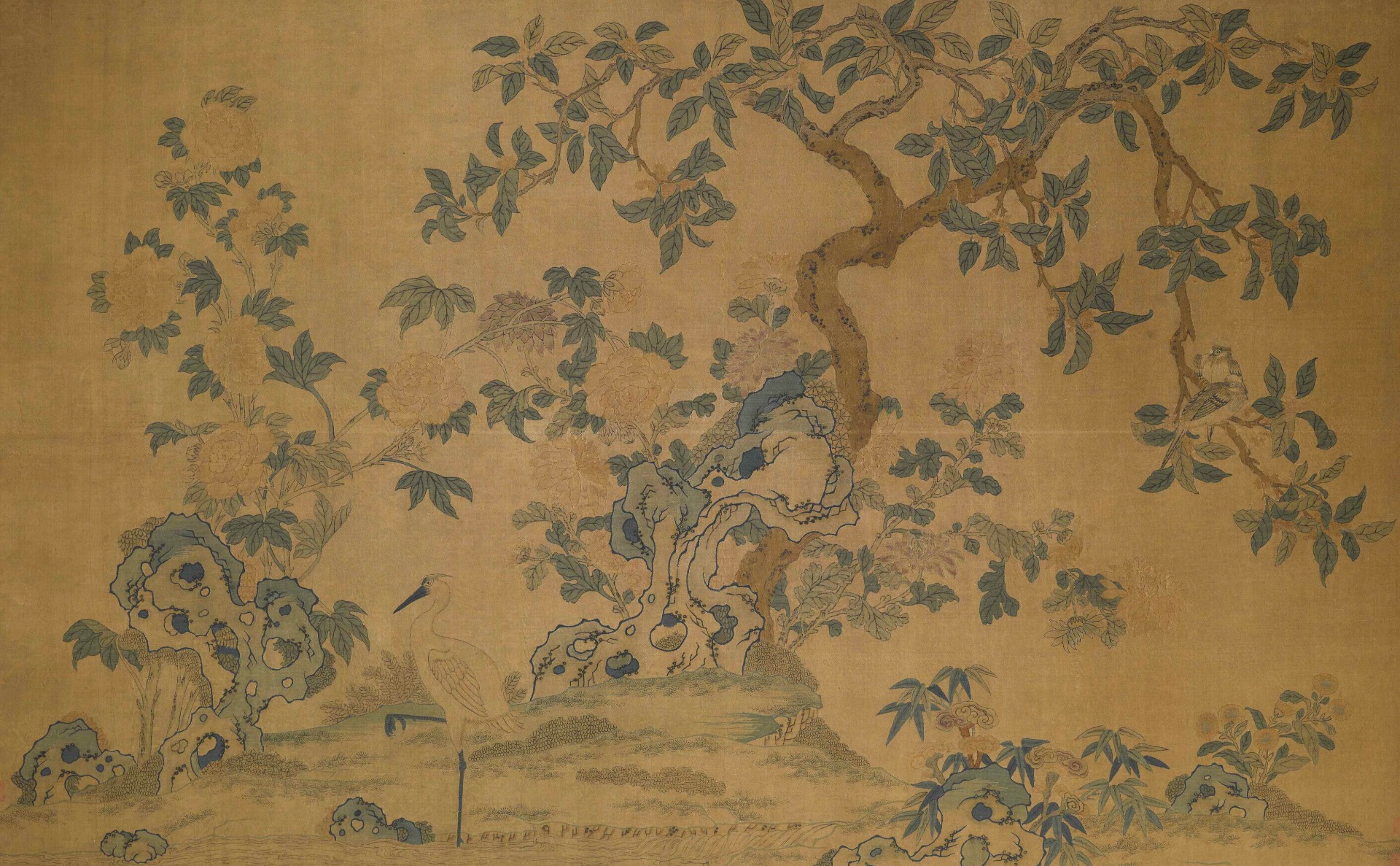
One of the most technically remarkable branches of Chinese textile art is kesi, often translated as cut silk tapestry. Unlike brocade, which interweaves supplementary weft threads continuously across the fabric, kesi uses colored weft threads that are inserted only where needed, creating complex pictorial designs that resemble fine paintings.
Kesi emerged during the Tang dynasty (618–907) but reached unparalleled refinement during the Song dynasty (960–1279). During this period, the imperial court and Buddhist institutions commissioned kesi for wall hangings, clothing, and ceremonial banners. The process is so meticulous that a master weaver might produce os of fabric per day, and it often required multiple artisans working in tandem over months to complete a single piece.
Technical Challenges and Artistic Flourishing
What sets kesi apart is its “discontinuous weft” technique: rather than running color threads across the entire loom, the artisan weaves each color section independently. This means that each hue—whether a dragon motif or a natural scene—is woven using itsrted with precision into the warp foundation.
By the Song and Ming dynasties, kesi evolved into a highly esteemed art form. It was often used to reproduce famous paintings or calligraphy works because it could capture the nuance and detail of brush strokes through weaving. This cross-disciplinary blend of visual arts and textile technique advances Chinese textile art into a medium as expressive as ink painting.
Cultural and Collectible Value
Today, surviving Song-era kesi textiles are exceptionally rare and valuable. Their scarcity stems from both the fragility of silk and the historical upheavals that led to the loss, repurposing, or destruction of many works over centuries. The few pieces that remain in museum collections are prized for their artistic complexity, and scholars often study them to understand cultural narratives of the era.
Collection Five: Jiangnan Region Embroidery
The Heart of Chinese Needlework
The Jiangnan region, encompassing the fertile lands south of the Yangtze River, has long been a cradle of refined Chinese textile art. Its embroidery traditions are among the most celebrated in Chinese history, with techniques that date back over 2,000 years. Suzhou embroidery (Su Xiu), one of the Four Great Embroidery Schools of China alongside Cantonese, Sichuan, and Xiang styles, exemplifies the region’s dedication to intricate needlework.
Technical Characteristics
Jiangnan textiles often feature motifs drawn from nature—such as birds, flowers, and landscapes—with extraordinarily fine stitches that can be nearly invisible to the naked eye. Master embroiderers employ a variety of stitching techniques, including satin stitch, split stitch, and long-and-short stitching, enabling subtle gradations of color and texture that mimic oil painting or watercolor effects.
These textiles were historically used on clothing, decorative panels, and ceremonial items. Rare pieces often depict scenes from classical literature or symbolic compositions that convey meanings such as happiness, longevity, prosperity, or harmony.
Preservation Challenges
Embroidery textiles are among the most delicate forms of Chinese textile art. Because they are oith thousands of tiny stitches, they require careful preservation. Exposure to light, humidity, or physical stress can cause threads to fade, break, or become brittle. Conservation efforts for rare Jiangnan embroideries often involve climate-controlled display cases, UV-filtered lighting, and minimal handling protocols.
Collection Six: Minority Ethnic Textile Traditions
Cultural Diversity in Chinese Textile Art
China is home to 55 officially recognized minority ethnic groups, each with its own textile traditions. Among the most distinctive of these are textiles from groups such as the Miao, Dong, Yao, and Zhuang peoples. These textiles are characterized by bold geometric designs, vividc motifs that carry deep cultural meaning.
For example, Miao embroidery frequently uses silver ornaments and complex stitching patterns that represent phoenixes, dragons, or natural elements. Dong textile art, on the other hand, may incorporate indigo dyeing and batik-style resist techniques that produce rich blue-and-white patterns unique to certain regions.
The Art of Zhuang Brocade
Zhuang brocade (Zhuangjin), originating from the Guangxi region, is known for its intricate geometric motifs and deep cultural symbolism. The craft has a history of over 1,000 years, and its production process involves multiple stages—from warping and heddle division to pattern transfer and weft beating—that together may encompass up to 15 distinct technical steps.
Originally, Zhuang brocade was a ceremonial textile used for dowries, festival attire, and offerings. Its complex patterns often integrate cosmological concepts such as yin and yang or depictions of legendary figures and local myths. Today, Zhuang brocade remains both a cultural treasure and a living folk art, preserved through community workshops and ethnographic documentation.
Preservation and Modern Recognition
Ethnic textiles are often less represented in mainstream art histories, but recent cultural preservation efforts have elevated thrnment-supported programs, national intangible cultural heritage lists, and museum exhibitions have helped document and promote these traditions. Nonetheless, the artisanal knowledge remains concentrated within small communities, and authentic pieces continue to be rare—especially those predating modern industrialization.
The China National Silk Museum and Preservation Efforts
A World Center for Textished in 1992 on the scenic shores of Hangzhou’s West Lake, the China National Silk Museum is one of the world’s most significant institutions dedicated to textile arts. With a sprawling exhibition space of over 50,000 square meters, it houses vast collections that span the full chronology of Chinese textiles— from ancient Han Dynasty fragments to contemporary works.
Under the leadership of textile scholar Dr. Zhao Feng, the museum has become a research-oriented center that investigates cultural exchange along the Silk Road, conserves rare textiles, and promotes global appreciation for Chinese textile heritage. Dr. Zhao’s interdisciplinary approach has positioned the museum as a key authority in textile conservation and scholarship.
Conservation and Education
The museum not only preserves textile artifacts but also conducts workshops, publishes research, and collaborates with international institutions. Its educational programs aim to cultivate an understanding of traditional techniques among younger generations, ensuring that crafts like kesi weaving and Jiangnan embroidery are not lost to time.
Regional Textile Techniques With Global Influence
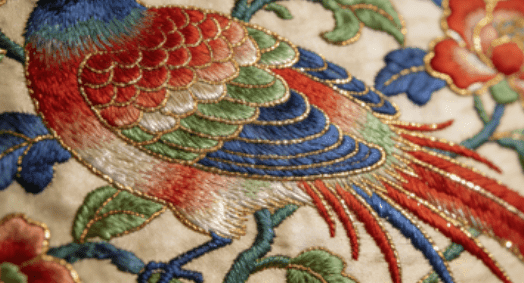
Chinese textile techniques have influenced markets and artistic practices worldwide. For instance, kesi and other silk-tapestry traditions have been admired and collected by fashion designers and art historians internationally. The rediscovery and revival of these techniques have led to modern reinterpret
ations in contemporary fashion, where garments and accessories incorporate traditional patterns and methods in innovative ways.
In recent years, traditional brocade and embroidery have been showcased on global runways, often highlighting the juxtaposition of ancient craftsmanship with modern design sensibilities. The integration of traditional techniques into luxury fashion reflects a broader renaissance of cultural heritage crafts in today’s globalized world.
Conclusion
Rare collections of Chinese textile art are living testaments to thousands of years of human creativity, cultural exchange, and artistic refinement. From dynastic court embroideries and brocades to ethnic minority textiles and sacred Tibetan silk panels, each piece embodies unique historical narratives and cultural meanings. Understanding these artifacts requires not only appreciation of their aesthetic value but also recognition of the social, spiritual, and technological contexts that shaped them.
Today, institutions like the China National Silk Museum and the dedication of textile scholars ensure that these traditions continue to be studied, preserved, and appreciated. As interest grows among collectors, academics, and designers worldwide, rare Chinese textile art remains not only a subject of historical inquiry but also a source of inspiration for contemporary art and fashion.
FAQ
What defines a textile as a rare piece of Chinese textile art?
A piece is considered rare based on age, production complexity, surviving quantity, cultural significance, and historical context.
Can collectors authenticate Chinese textile art?
Yes. Authentication typically involves provenance research, expert textile analysis, and comparison with documented historical techniques.
How should rare textiles be preserved at home?
Experts recommend storing older textiles in climate-controlled environments, avoiding light exposure, and using archival materials for display.
Are these textile techniques still practiced today?
Many traditional techniques survive through cultural heritage programs, regional craft workshops, and museum-led training initiatives.
Where can one view authentic Chinese textile art collections?
Major museums around the world, including the China National Silk Museum, British Museum, and Metropolitan Museum of Art, feature important examples in their collections.